


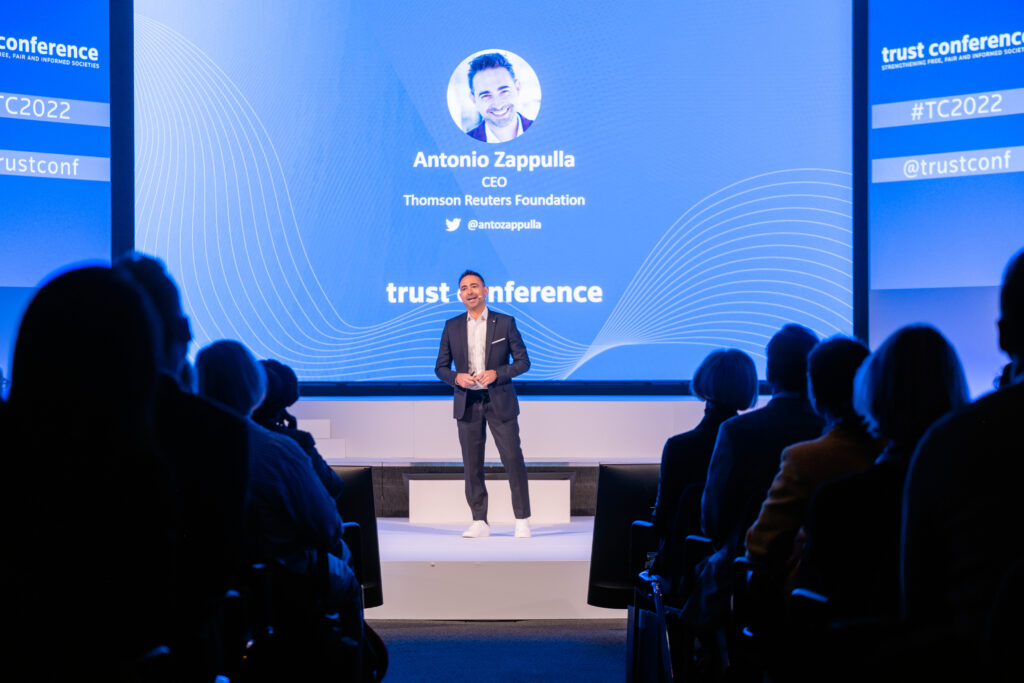
Trust Conference – the Thomson Reuters Foundation’s flagship annual event – convened some of the world’s most innovative and influential speakers to discuss the pressing concerns at the intersection of socio-economic inclusion, sustainability, media freedom and human rights.
These global challenges, while distinct, overlap in ways which are important to explore. In the face of such complex and interrelated issues, agility, innovation and collaboration are key. At this year’s Trust Conference, held on 26 and 27 October, over 600 delegates from a variety of countries and sectors came together to share expertise, discuss solutions, and call for action.
Here are some of the most noteworthy moments of this year’s conference:
The role of journalism in maintaining free, fair, and informed societies
Trust Conference opened with a series of sessions exploring the role of free media in keeping societies informed and holding power to account. We heard from reporters, lawyers, and media experts alike as they discussed how best to protect media freedom in the face of censorship.
Against a backdrop of images from the ongoing crisis in Ukraine, two-time Pulitzer winning photographer Alkis Konstantinidis was adamant: reporters like him must be steadfast in the face of misinformation and remain true to principles of journalistic integrity.
Moderating an earlier discussion with three Kurt Schork award winners, recognised for their vital conflict reporting delivered at great risk to their personal safety, CNN’s Chief International Anchor Christiane Amanpour was equally unequivocal.
Conflict is but one threat to the safety of reporters; state violence towards journalists is widespread and pernicious. Irene Khan, the UN’s Special Rapporteur on the promotion and protection of the right to freedom of opinion and expression, acknowledged that entities which supress media are unlikely to investigate crimes against journalists.
Suppression of media often comes hand in hand with other authoritarian measures. Unjustly imprisoned for six years by the Iranian regime, Nazanin Zaghari-Ratcliffe’s speech to delegates made the point that when freedom of expression suffers, society at large will bear the brunt.
Despite the unimaginable personal toll of her experience, ultimately Nazanin’s speech was hopeful. She expressed that, while free, fair, and informed societies are not easily won, progress can be made through resilience and solidarity.
How can the digital world work for us, not against us?
At Trust Conference, the advantages and disadvantages of our lives being increasingly conducted in online spaces were a hot topic of discussion.
During a session on the role bitcoin can play in supporting free and independent media, Alex Gladstein, Chief Strategy Officer of the Human Rights Foundation, explained how cryptocurrency is increasingly being used to fund people and organisations whose bank accounts aren’t secure, or are under surveillance.
In a later session on the repercussions of the Cambridge Analytica scandal, Brittany Kaiser, Co-founder of the Own Your Data Foundation (who joined remotely), described another benefit of blockchain: its potential to keep personal data, and its use by external entities, transparent and secure.
But, said Ravi Naik, Legal Director at AWO, we can only ensure that technologies like Blockchain are used ethically if we stay vigilant, and continue demanding that our legal rights are observed.
The interconnected global challenges driven by the climate emergency
Trust Conference examines issues with wide-ranging, interlinked consequences. This year, the climate emergency was repeatedly referenced as a threat to people’s rights and livelihoods in several distinct but related ways.
Climate justice activist Vanessa Nakate drew delegates’ attention to the urgency of the climate emergency and
Share


Sign up to our newsletter
More News
View All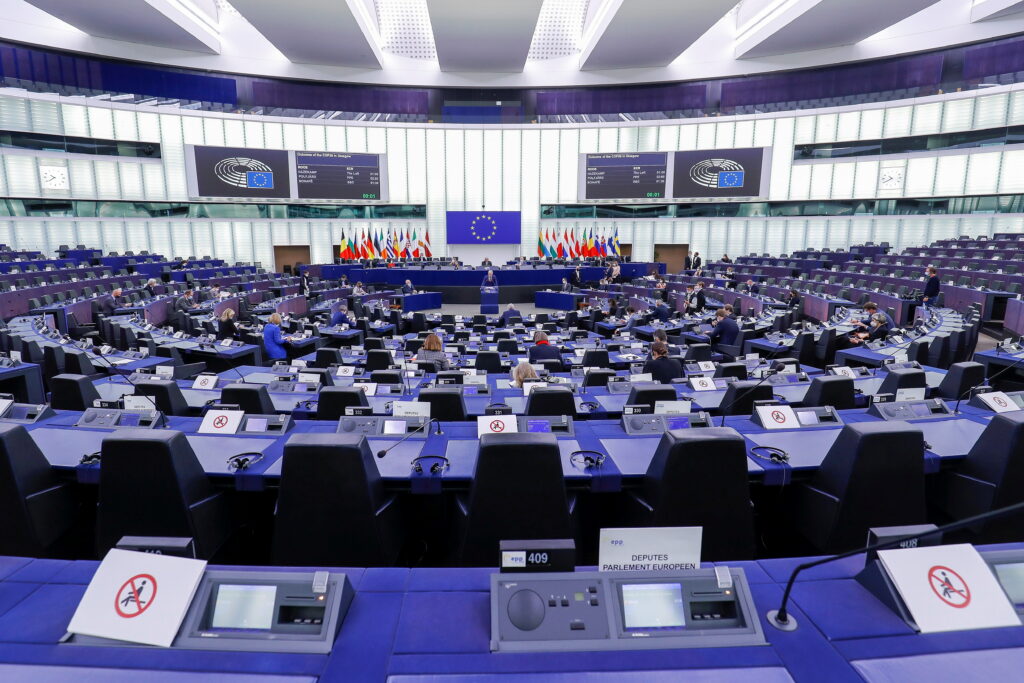
What the EU’s Procurement shift could mean for workforce disclosure
Our reflections ahead…
Read More
Why existing support for civil society can’t solve this crisis
Most support wasn’t designed…
Read More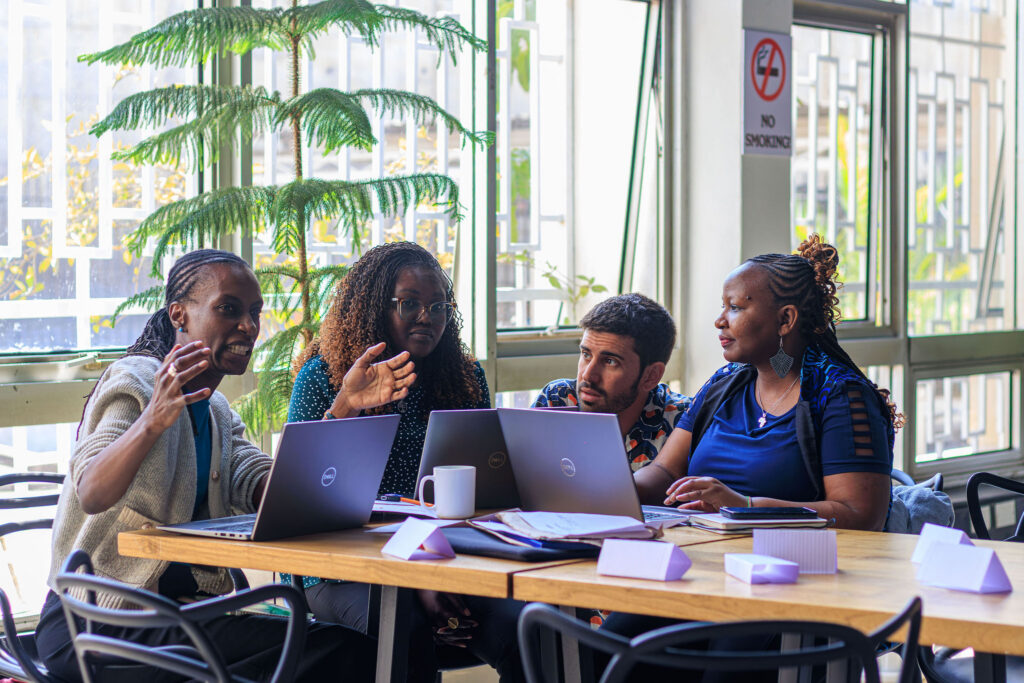
What happens when content creators and journalists come together?
Our Multimedia Editor for Openly,…
Read More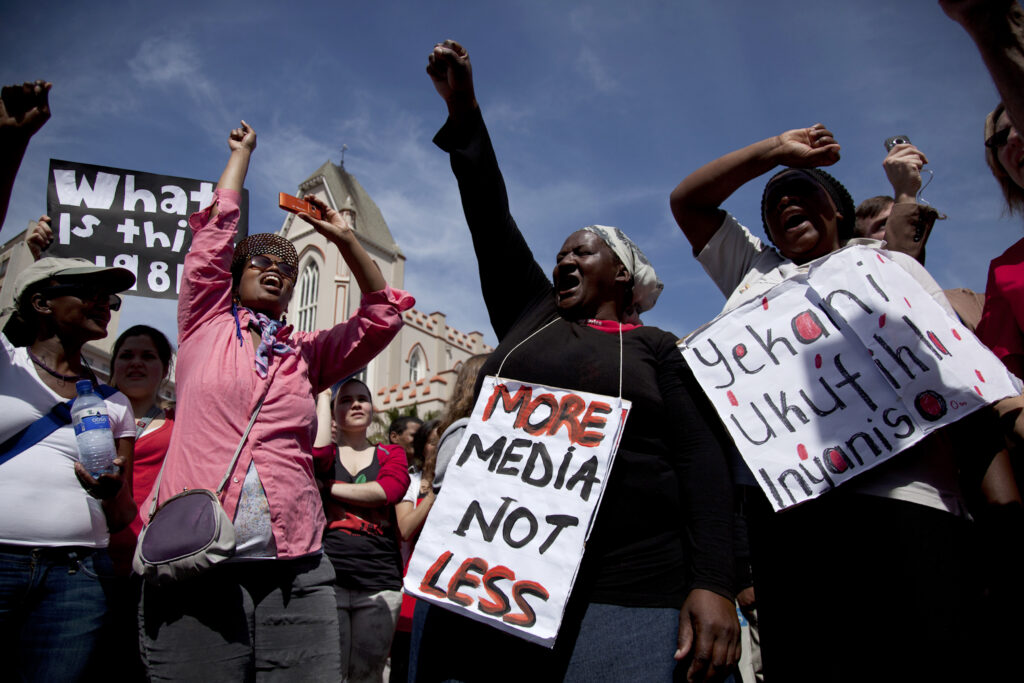
Constitutional protections are not enough to defend press freedom: what our research in South Africa shows
South Africa’s constitutional protections for press freedom are among the strongest on the…
Read More
New report reveals the extent of EU AI Act influence
Our research on 3,000 companies shows the EU AI Act is…
Read More
What compliance with the EU AI Act actually looks like
Five things every Compliance expert needs to consider…
Read More
Civil society is being cut off and locked down at the same time
From Georgia to Venezuela, civil…
Read More
What’s driving pro bono growth in Europe?
As demand for pro bono legal support surges across Europe, the Global Pro Bono…
Read More
Why a free press is the world’s best defence against impunity
Press freedom decline drives…
Read More
When regulators, investors and industry sit down together: Our Brussels roundtable on AI governance
A candid conversation about responsible AI – and how far most companies still have to…
Read More

