


Our new TRF Insights report sheds light on the opportunities and challenges of AI in journalism in the Global South and emerging economies.
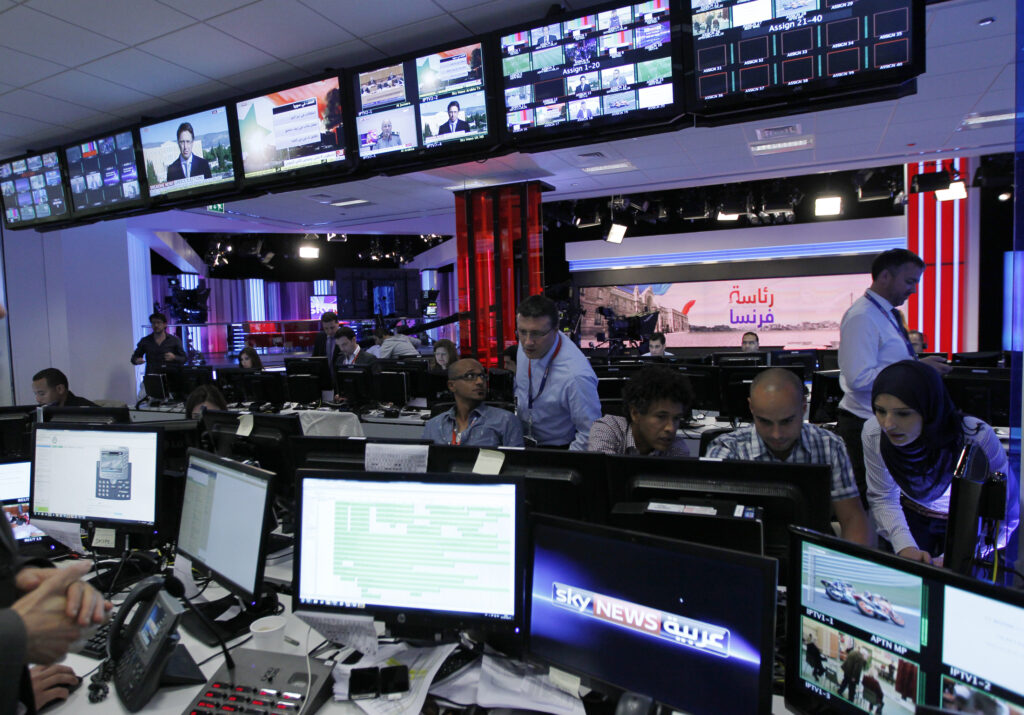
A new report from the Thomson Reuters Foundation finds that journalists in the Global South and emerging economies are cautiously optimistic about the effect of artificial intelligence (AI) on journalism.
From enhanced efficiency to personalised reporting, AI is changing how we produce, distribute and consume news. Yet the adoption of AI by newsrooms varies around the world, as does the access to this technology, and attitudes towards it.
A global survey
Journalism in the AI era: Opportunities and challenges in the Global South and emerging economies amplifies the voices of journalists in the Global South and emerging economies, to provide a unique and timely snapshot of AI in journalism in more than 70 countries
From October to November 2024, we surveyed more than 200 journalists – all alumni of our training programmes – to explore their use of the technology and their hopes and fears for the future.
Their perspectives are published today in the first in our TRF Insights series, which draws on our extensive global network to take the pulse of major developments in the profession and provide data-led insights for the sector.
What we found
The journalists that we spoke to were cautiously optimistic about AI in journalism, with over 80% using it for a wide variety of tasks.
42% were positive about the future use of the technology, despite over half expressing high levels of ethical concerns.

I use AI in designing still images for posters. I use AI in sound processing. I use AI in the translation of my subtitles. There is a proliferation of AI software in all categories: publishing, multimedia, visual infographics…
Nonetheless, journalists in the Global South and emerging economies reported distinct challenges, including a lack of training, unequal digital access, concerns about the loss of human-centred skills, and reduced transparency for audiences. For example, despite widespread adoption, just 13% reported that their employer had a policy on AI use.
AI has the potential to completely reshape journalism, offering tools that can enhance efficiency and content creation. However, there’s uncertainty about whether this change will be entirely positive.
Authored by Professor Damian Radcliffe, Chambers Chair in Journalism at the University of Oregon, Journalism in the AI era concludes with recommendations for stakeholders including journalists, media development organisations and funders. Responding to the needs highlighted by journalists, the recommendations are designed to enable newsrooms to harness the benefits of AI in journalism, while ensuring the ethics, standards and values of the profession remain intact.
For more than 40 years, the Thomson Reuters Foundation has supported independent media and trained more than 20,000 journalists around the world. This legacy has allowed us to develop a global community of media professionals, giving us unique insights into the complex issues facing journalism.
Today we enable world-class journalism by equipping journalists with the skills to uphold high reporting standards, while navigating rapid technological change.
Share


Sign up to our newsletter
More news
View All
AI legislation is important in upholding universal human rights
Our Director of Responsible Business,…
Read more
How civil society can counter the rise of legal restrictions across Latin America
New…
Read more
Legal support: a lifeline for civil society and democracy
How democracies become stronger when civil society…
Read more
How upholding workers’ rights builds democratic resilience
How businesses treat their workers…
Read more
Protecting independent media is protecting democracy
How protecting independent media protects democracy itself.
Read more
What legal risks do content creators face? 5 key considerations for influencers
Content…
Read more
What the EU’s Procurement shift could mean for workforce disclosure
In the wake of the…
Read more
Why existing support for civil society can’t solve this crisis
Most support wasn’t designed…
Read more
What happens when content creators and journalists come together?
Our Multimedia Editor for Openly,…
Read more
Constitutional protections are not enough to defend press freedom: what our research in South Africa shows
South Africa’s constitutional protections for press freedom are among the strongest on the…
Read more

