


Looking back on 2025, it is impossible to ignore the stark reality that the communities we serve have faced.
- This year was yet another deadly one for journalists.
- The continued and insidious spread of ‘foreign agent’ laws has sought to silence dissent and control public narratives.
- The rapid evolution of AI has granted journalists new capabilities, but with them come immense ethical responsibilities.
- And all of this has unfolded against a backdrop of severe foreign aid cuts that have left the non-profit sector reeling, increasing the demand for support just as resources have become scarce.
In the face of these challenges, our mission to build free, fair, and informed societies has never felt more urgent. This year, we’ve responded by leveraging the full power of our media, legal, and data-led expertise.
From collating data insights to delivering on-the-ground support, our impact is a testament to collective action. I am incredibly proud of what our global team has accomplished, and deeply grateful to our partners, donors, and community members who make this work possible.
To celebrate these achievements, I would like to share my highlights from this year that exemplify the tangible difference we are making together.
Our data-driven expertise
1. Building resilience for civil society organisations (CSOs)
This month, on Human Rights Day, we launched our new TRF Insights report: Rising Pressure, Rising Needs.
The report is based on a survey our global pro bono service, TrustLaw, conducted with its non-profit members, most of which are small, grassroots organisations with fewer than 50 staff members. The findings make for grim reading: half of these organisations reported an increase in their legal needs in the last year alone.
of CSOs reported rising legal needs over the last year.
A figure that increases to 65% in Asia and 70% in North America.
In response, we are doing what the Foundation does best: drawing on our unique expertise to provide practical support.
For over 40 years, we have developed a tried-and-tested model for building 360° organisational resilience for independent newsrooms around the world. We are now adapting this model for the civil society organisations in our network, offering a package that includes not only legal support, but also communications advice, financial planning, and guidance on digital security and AI adoption.
This is a critical moment, and one that demands a collaborative response. If you share our commitment to strengthening these vital organisations so that they can continue their work at the frontlines of social and environmental change, and would like to explore partnership opportunities, my team and I would be delighted to connect.
2. Hosting the world’s largest dataset on corporate AI adoption
The private sector is in a race to embrace AI, but there is a real danger that governance is being left behind.
Our AI Company Data Initiative – developed with UNESCO – aims to address this critical imbalance by building a global dataset on corporate AI adoption to drive transparency and best practice. In November, the initiative became the world’s largest dataset on corporate AI adoption, compiling publicly available data from 1,000 global companies across 13 sectors.
What the data reveals is a concerning lag between ambition and implementation on criteria essential to the public interest, including carbon footprint and AI’s broader societal impact.
did not consider energy use and carbon footprint when considering which AI system to deploy.
of companies with an AI policy made it accessible to employees or required their acknowledgment.
Among companies with AI strategies, 68% did not assess societal impact of AI beyond end users.
Business leaders and investors face regulatory, reputational, and operational risks from the AI transparency gap – risks that traditional analysis frequently overlooks. Our initiative offers data-based insights to help close this gap and inform better decision-making.
3. Celebrating 10 years of benchmarking pro bono
Across the globe, we are witnessing a concerning rise in the use of repressive laws to silence dissent and shrink the space for civil society. Pro bono legal support to help individuals and organisations navigate these evolving legal threats is more important now than ever before.
Ten years ago, our TrustLaw team launched the TrustLaw Index of Pro Bono with an ambitious goal: to map the landscape of pro bono legal support worldwide. We wanted to use data to understand trends, share good practices, and create clear benchmarks for the legal profession.
Now a decade on, I’m proud to see that the number of participating firms has more than doubled, and spans over 120 countries. This year’s findings reveal a significant and encouraging shift: a growing recognition among law firms that pro bono work is not just altruism – it’s an integral part of a modern, successful legal practice. This evolution gives me real hope for the future.
Our support for newsrooms
4. Building AI capacity for independent media
In an already challenging and turbulent context for independent media, AI can be critical to outlets’ survival. But many lack the time, means or expertise to maximise opportunities and minimise risks.
Launched in January, our first TRF Insights survey collated journalists’ insights from more than 70 countries in the Global South and emerging economies. The report found a disconnect between journalists who are using the technology and the amount of available training.
While over 80% of journalists we surveyed are using AI, the majority were self-taught and only 13% reported that their newsrooms had an AI policy in place.

“At the rate the world is moving, in terms of tech advancements, [AI] could harm this profession. More regulations need to be put in place to protect our industry and the ethical conduct embedded in it.”
To address this gap, we published free resources and delivered two complementary programmes focused on supporting newsrooms in Sub-Saharan Africa and Latin America, as well as exiled outlets, to strategically and ethically adopt AI.
5. Providing training and support to newsrooms and journalists
With foreign aid cuts putting newsrooms in jeopardy and an increasing number of autocratic leaders attacking a free press, the environment for independent journalism has continued to be incredibly challenging.
Our work to support independent media has never been more crucial.
Throughout 2025, we worked directly with more than 50 newsrooms – focusing on the Global South and exiled outlets – to build their resilience. We provided services to improve long-term sustainability, help strategically navigate technological change, and facilitated free legal assistance to help withstand these attacks.

At the same time, we trained over 300 journalists from 60 countries, equipping them with the expertise to provide informed and balanced coverage across diverse topics – from the human rights risks of AI and the impact of the green transition on workers, to uncovering the illegal movement of assets across borders.
In our recently published news story, one journalist describes how our training, mentoring and a small grant fundamentally changed his approach to investigative journalism.
6. Maximising impact in the Media Freedom Coalition
2025 marks the third year that the Foundation has hosted the Secretariat of the Media Freedom Coalition – a vital partnership of countries committed to advocating for media freedom and the safety of journalists worldwide.
Our role is to help maximise the Coalition’s impact, turning diplomatic commitments into concrete actions that make a tangible difference on the ground for journalists at risk.
A clear example of this came in June, when the Secretariat helped facilitate a landmark media freedom mission to the Philippines. Working with embassies and the MFC’s Consultative Network, the visit put a crucial spotlight on the safety of journalists in the country.
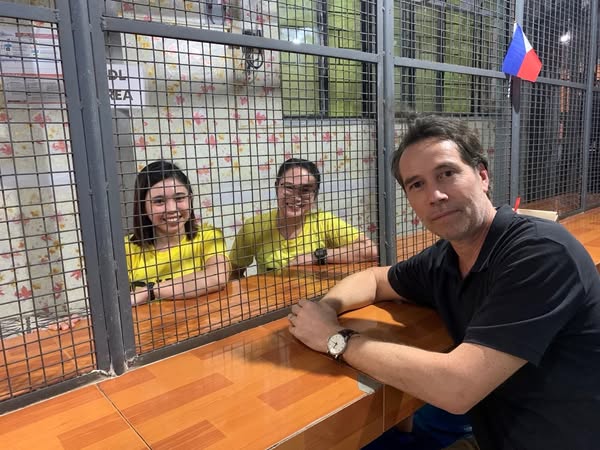
This also directly resulted in the Deputy Ambassador of the Netherlands to the Philippines visiting journalist Frenchie Mae Cumpio in prison – currently the only detained journalist in the Philippines – who has been in pre-trial detention for more than 5 years.
Our conference
7. Trust Conference
In October, our annual Trust Conference brought together over 750 delegates from more than 40 countries across the globe to confront the most urgent challenges facing us today.
We heard moving testimonies from journalists and advocates Alsu Kurmasheva, Nevşin Mengü, and Frank Mugisha, who bravely shared their experiences of being targeted by the state. But with support from legal experts like Can Yeginsu and Karen Kaiser, we also heard about how they are fighting back.
The collective commitment to finding workable solutions framed our discussions across our focus areas: from charting a path toward responsible AI to addressing the seismic funding cuts impacting civil society.
I am immensely proud that the Foundation can convene these critical conversations, and so grateful to our speakers and delegates whose expertise enriches the forum. As ever, my huge thanks go to our supporters – the People’s Postcode Lottery Group, Omidyar Network and Siegel Family Endowment – without whom the event would not be possible.
Looking ahead: What’s next for 2026?
The challenges we have navigated this year will undoubtedly continue into 2026. Yet, the strength and commitment I have seen from our partners, our team, and our global community give me immense hope for what we can achieve together. It is this spirit of collaboration that fuels our ambition for the year ahead, where our work to bolster free, fair, and informed societies will be more critical than ever.
We have an ambitious year lined up, and I am confident in our collective ability to meet the moment.
A key part of this will be expanding our pioneering data initiatives, the AI Company Data Initiative (AICDI) and the Workforce Disclosure Initiative (WDI) to provide even richer insights on corporate AI and workforce practices, giving companies and investors the clarity they need to drive responsible change. We’ll also focus on scaling and rolling out our proven support model to help civil society organisations withstand the multifaceted challenges that continue to face the sector.
I look forward to sharing our progress and impact with you throughout the coming year. To stay updated on our work, I invite you to subscribe to our newsletter and continue this journey with us.
Share


Sign up to our newsletter
More News
View All
Welcoming our new Director of Insights & Innovation, Rebecca Vincent
We are delighted to…
Read More
Supporting women’s participation in financial investigative journalism in sub-Saharan Africa
We supported women’s participation in business reporting and enhanced…
Read More
Welcoming our new chairman – and honouring a remarkable legacy
Our CEO, Antonio Zappulla,…
Read More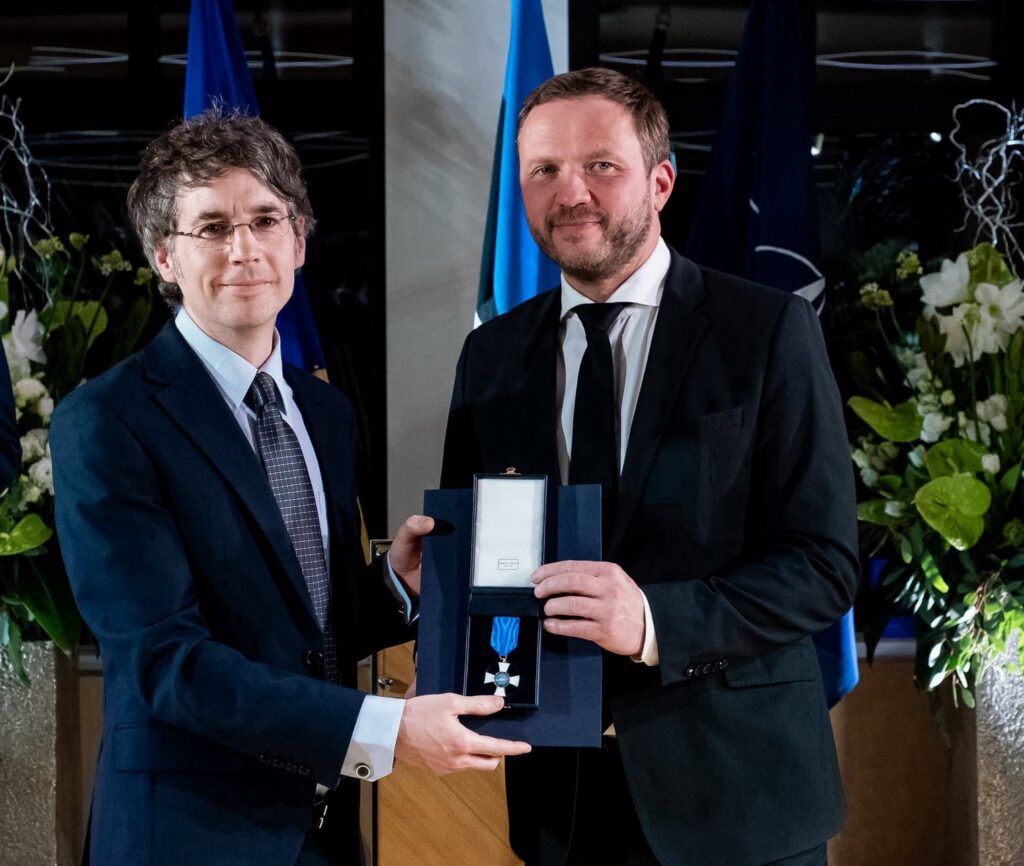
How the MFC Secretariat supports the Media Freedom Coalition to protect independent media at home and abroad
The MFC Secretariat, hosted by the Foundation, was awarded the Cross of Merit from the…
Read More
Statement on the Closure of the Context News Brand
A statement on the Closure of the Context News Brand from…
Read MoreSupporting media and CSOs to curb illicit financial flows across sub-Saharan Africa
We…
Read More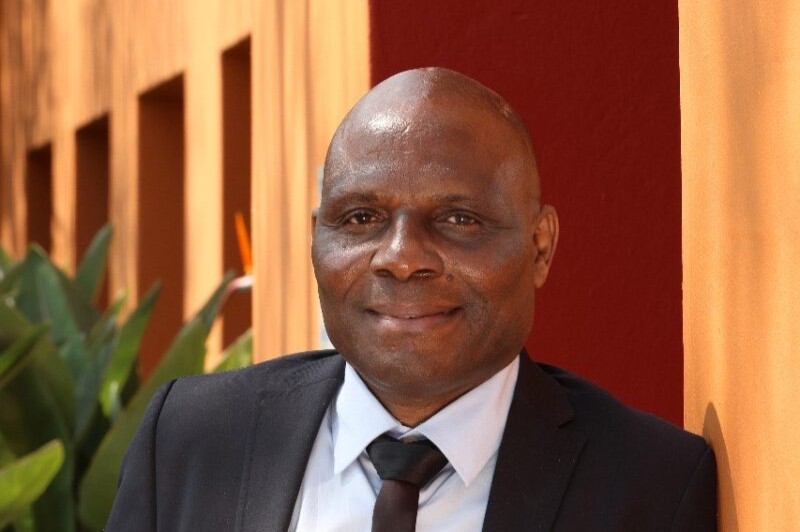
Uncovering illicit financial flows: Training that transformed one journalist’s approach to reporting
Find out how training from the Thomson Reuters Foundation transformed Fidelis…
Read More
Legal needs are rising for NGOs amid attacks on civil society and funding cuts, our latest report finds
Our new report finds that legal needs amongst NGOs have risen significantly over the last…
Read More
How South African newsrooms are benefiting from strategic and ethical AI adoption
We have…
Read More
World’s largest dataset shows transparency gaps in AI adoption
The Thomson Reuters Foundation…
Read More

