


LONDON (Jan 15, 2018) — Applications are now open for the second cycle of the Food Sustainability Media Award, which recognises excellence in reporting on food sustainability issues across the globe.
Launched in December 2016 by The Thomson Reuters Foundation and the Barilla Center for Food and Nutrition (BCFN), the initiative invites media professionals, bloggers, freelancers and individuals to submit both published and unpublished work highlighting issues related to food security, sustainability, agriculture and nutrition.
The initiative aims especially to shed light on three major paradoxes affecting the global food system – and especially to find ways to address them:
Hunger vs. Obesity – for every undernourished person there are now two obese or overweight people in the world;
Food vs. Fuel – a third of agricultural cereal crops are used to produce animal feed or biofuels despite hunger and malnutrition;
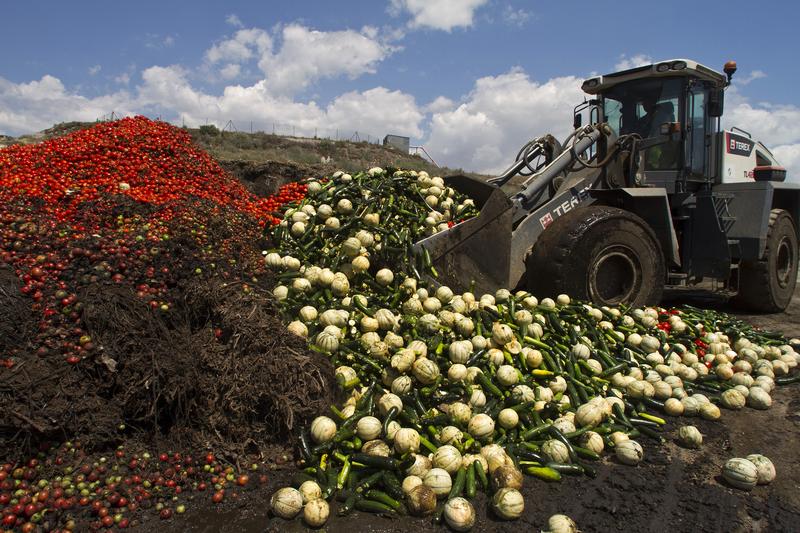
Waste vs. Starvation – 1.3 billion tons of edible food is wasted every year, four times the amount needed to feed the 815 million undernourished people around the world.
By leveraging the power of mainstream and new media, the Award seeks to draw public attention to the issue of food sustainability, engaging a wide and global audience.
“Making our food system more sustainable in this era of climate change is crucial. It’s something everyone can play a part in if they understand the issues and that’s why good journalism is essential,” says Thomson Reuters Foundation CEO Monique Villa. “This Award aims to recognise journalists who bring the challenges and solutions – if there are any – to life in a simple and powerful way.”
“Since its beginning, the BCFN has worked to raise awareness around food and sustainability issues. It’s now time for a step change: we need to get people more involved and to find possible solutions to combat our food paradoxes – and the media has a key role to play in this” said Guido Barilla, BCFN Chairman.
This year the Food Sustainability Media Award will accept work in two
categories: written journalism and multimedia, for which video (including animations), audio and photography submissions will be eligible. One published and one unpublished submission will be awarded for each category. In addition, all finalist work will be put forward for the Best of the Web Award, chosen by the public.
Winners awarded for their published work will receive a cash prize of €10,000. Winners awarded for their unpublished work, as well as the winner of the Best of the Web Award, will receive an all-expense paid trip to attend a Thomson Reuters Foundation media training course on food sustainability. All winning unpublished entries will be distributed via the Thomson Reuters Foundation and the BCFN Foundation websites. The winning unpublished article will also be distributed through the Reuters newswire, reaching an estimated 1 billion readers.
Last year’s winners can be viewed on the Award website.
The Jury
All shortlisted entries will be assessed by a distinguished panel of judges made up of leading professionals in the fields of journalism, photography, food and agricultural sustainability policy and research, including:
– Director of La Repubblica, Mario Calabresi
– Thomson Reuters Foundation Climate Editor, Laurie Goerin
– Global Editorial Director, Thought Leadership at The Economist Group, – Irene Mia
– Coordinator of the SDG2 Advocacy Hub, Paul Newnham
– Founder of Food Tank, Danielle Nierenberg
– Photographer and Author, Finbarr O’Reilly
Submissions
Submissions are open from 15th January until 31st May 2018 and candidates can enter via the Food Sustainability Media Award website. The work of all finalists will be made public on the website by early October. Voting for the Best of Web prize will also open in early October 2018. The winners of each category will be announced at the 9th International Forum of the Barilla Center for Food & Nutrition (BCFN) Foundation, held 27th-28th November 2018.
About the Thomson Reuters Foundation
The Thomson Reuters Foundation acts to promote the highest standards in journalism and spread the practice of legal pro bono worldwide. The
organisation runs initiatives that inform, connect and empower people around the world: access to free legal assistance, editorial coverage of the world’s under-reported news, media development and training, and the Trust Conference.
About the Barilla Center for Food and Nutrition Foundation
The BCFN Foundation is a multidisciplinary research center analyzing the cause and effect relationship that economic, scientific, social and environmental factors have on food. It produces invaluable scientific content that can be used to inform and help people make conscious choices every day about food and nutrition, health and sustainability.
Media Contacts:
Zeina Najjar
Thomson Reuters Foundation
[email protected]
Direct: +44(0)207 542 5817
Award Enquiries:
Helen Reeve
Thomson Reuters Foundation
[email protected]
Direct: +44(0)207 542 1099
BCFN Media Relations
Luca Di Leo, Head of Media Relations, [email protected] , +39 0521 2621
Valentina Gasbarri, Communication and External Relations Manager,
[email protected] , +39 338 7882700
Share


Sign up to our newsletter
More News
View All
AI legislation is important in upholding universal human rights
Our Director of Responsible Business,…
Read More
Cómo la sociedad civil puede contrarrestar el aumento de las restricciones legales en América Latina
Una nueva investigación realizada por Thomson Reuters Foundation ha revelado un patrón…
Read MoreHow civil society can counter the rise of legal restrictions across Latin America
New…
Read More
Legal support: a lifeline for civil society and democracy
How democracies become stronger when civil society…
Read More
How upholding workers’ rights builds democratic resilience
How businesses treat their workers…
Read More
Protecting independent media is protecting democracy
How protecting independent media protects democracy itself.
Read More
What legal risks do content creators face? 5 key considerations for influencers
Content…
Read More
What the EU’s Procurement shift could mean for workforce disclosure
In the wake of the…
Read More
Why existing support for civil society can’t solve this crisis
Most support wasn’t designed…
Read More
What happens when content creators and journalists come together?
Our Multimedia Editor for Openly,…
Read More

