


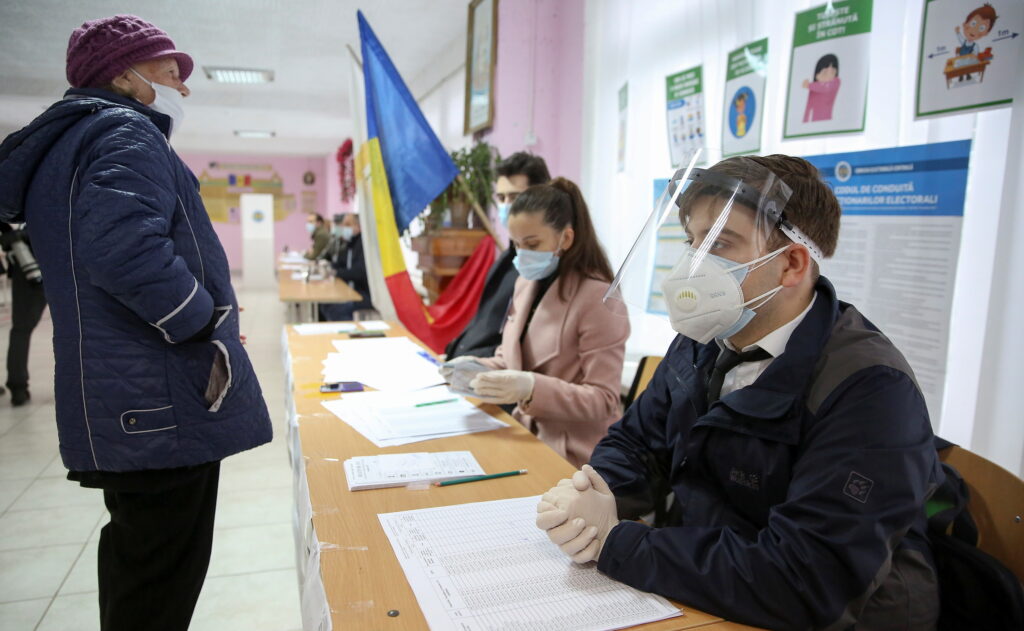
International rankings continue to place the Republic of Moldova, just as during the communist government, among the states with a “partially” free press. One of the causes – and probably the most important reason behind this ranking – is that a lack of financial resources creates the dependence of some media institutions on political factors.
Independent media institutions that survive from international grants and projects are not sure they will have the money to pay their employees. They have to constantly apply for project funding, but they also have to learn to survive on their own, from advertising that is dependent on views. And here comes the dilemma between ethics and fairness and the need to survive.
For example, two years ago, TV8 Television – which reported numerous times on how the foundation of the politician and oligarch Vladimir Plahotniuc, ‘Edelweiss’, offered donations of obscure and non-transparent money – broadcast an advertisement for the foundation he owned.
Ziarul de Gardă, the first and only investigative newspaper in the Republic of Moldova, is reluctant to include advertisements in the newspaper. Each time they had to check who was behind a construction company that placed an advertisement, to see if the owner was not listed in corruption or fraud cases. That is why it was a long period in which newspaper advertising was practically non-existent or too little to cover the expenses of the editorial office.
This made the dependence on projects and grants even greater because the money coming from newspaper subscriptions was too small even to cover the circulation. That is why diversification of income sources is a problem for those who refuse dubious advertising.
In the Republic of Moldova, the only national television in the state budget is ‘Moldova’, which should report objectively. On 8 June 2018, while people were protesting, the channel broadcast songs and dances. In recent years, there have been several cases when biased materials have been observed on the part of those in charge.
The state has no interest in cultivating press freedom and developing a truly equitable and non-partisan press. And according to polls, television stations that are politically controlled enjoy the greatest popularity, which leads to misinformation and manipulation of the population.
There is also the issue of transparency in media funding, as opposed to the editorial independence that we can estimate by analysing the content.
– Liliana Botnariuc, journalist, Moldova, Thomson Reuters Foundation Alumnus


More Impact Stories
View All Impact Stories
Securing protections for marine protected areas in Europe
Pro bono legal research by Hogan Lovells…
Read More
Protecting independent media under legal threat in El Salvador
SembraMedia used pro bono legal advice…
Read More
Improving access to philanthropic giving across Asia
Pro bono support provided by Dechert LLP helped AVPN…
Read More
Pro bono as a force for good: An interview with Cynthia Mudaye
Cynthia Mudaye from Mudaye & Co….
Read More
How in-house counsel is shaping the future of pro bono
Representatives from MSD explore how to strengthen the…
Read MoreBuilding the pro bono infrastructure needed across East Africa
Cathy Mputhia, CEO of C. Mputhia…
Read More5 tips to building a robust pro bono programme
Katie Marquart, Partner and Pro Bono Chair at Gibson Dunn, shares…
Read More
Reporting with empathy: one journalist’s journey to allyship
Discover how training from the…
Read More
Shielding community journalism: How pro bono legal expertise broke the cycle of self-censorship for one Kenyan radio station
How pro bono legal support helped Kenyan radio station Radio Domus update editorial policies, ending…
Read More
Combatting international corruption: The pro bono research behind the landmark Foreign Extortion Prevention Act
Discover how pro bono legal expertise has created truly impactful tools for fighting corruption.
Read More

