


How training from the Thomson Reuters Foundation shifted Peter Ongera’s perspective on reporting on LGBTIQ+ issues.
The media has a critical role in upholding the rights of the LGBTIQ+ community and fostering greater understanding. Hivos’ Free to Be Me programme aims to ensure that societal leaders, influencers, media and the public increasingly and openly support the rights of LGBTIQ+ people.
As part of this programme, from 2023-2025 we ran training courses in Kenya, Namibia and the Philippines to equip journalists to report on LGBTIQ+ issues in complex environments. We also trained civil society organisations working on diversity and inclusion on media and communications skills.
Our dual-track approach brought together participants from both groups, connecting journalists with representatives of the communities they cover.
At the end of the programme, journalists pitched to be part of a 10-week mentorship programme to develop a story on LGBTIQ+ issues.
Kenyan journalist Peter Ongera explains how the training changed his perspective on LGBTIQ+ issues and enabled him to report in a more inclusive and representative way:
“Before I joined the Thomson Reuters Foundation training on inclusive LGBTIQ+ reporting, my journalism focused primarily on public health, social issues, and governance in Kenya. While I often covered HIV/AIDS, community struggles and development aid, I now realise that I approached these stories from a conventional, mainstream perspective — one that unintentionally overlooked the voices and experiences of marginalized groups, particularly LGBTQI+ people. My framing lacked the sensitivity and depth required to highlight how stigma, identity, and systemic inequality shape everyday realities.

“Being part of this journey has made me a more thoughtful, intersectional, and justice-driven journalist. I no longer just report on communities — I report with them.”
A transformative experience
The training was transformative. It covered inclusive language, ethical storytelling, intersectionality, and the importance of sourcing stories responsibly and safely — especially in sensitive and hostile reporting environments. Our cohort was diverse, including journalists like myself, as well as civil society actors, LGBTIQ+ individuals, and activists. That diversity enriched our discussions, grounding the lessons in lived realities.
One session that stayed with me involved real-world case studies and peer feedback. It forced me to confront unconscious bias and rethink how even a headline can harm or humanise. I remembered how I was once publicly criticised for titling a story ‘Are You Male, Female, or Abnormal?’ — and how I had to change it to ‘Are You Male, Female, or Intersex?’ after backlash.
That experience, combined with the training, reshaped not only how I write but also how I listen. I now prioritise informed consent, dignity, and safety when working with sources — and I take time to build trust, particularly with those whose stories are often silenced or sensationalised.
Connections with sources
The impact of the training didn’t stop at the classroom. I built lasting connections, including with the publishers of Forward Together Africa — a news platform founded by fellow trainees, where I now contribute stories centred on inclusion, justice, and equality.
I also established a working relationship with the Communications Officer at the Gay and Lesbian Coalition of Kenya, who continues to help me access trusted sources and community voices.
Sensitive reporting
This shift in my reporting is reflected in my commissioned article for Context, the Thomson Reuters Foundation’s global news platform. I examined how shrinking U.S. aid is affecting Kenya’s grassroots HIV/AIDS response— with a spotlight on vulnerable communities often left out of donor conversations. I also recently covered the stigma faced by trans and non-binary people in Kenya who menstruate, speaking to people about the challenges they face in accessing period products. The training equipped me to tell those stories with nuance, integrity, and inclusion.
Being part of this journey has made me a more thoughtful, intersectional, and justice-driven journalist. I no longer just report on communities — I report with them.”


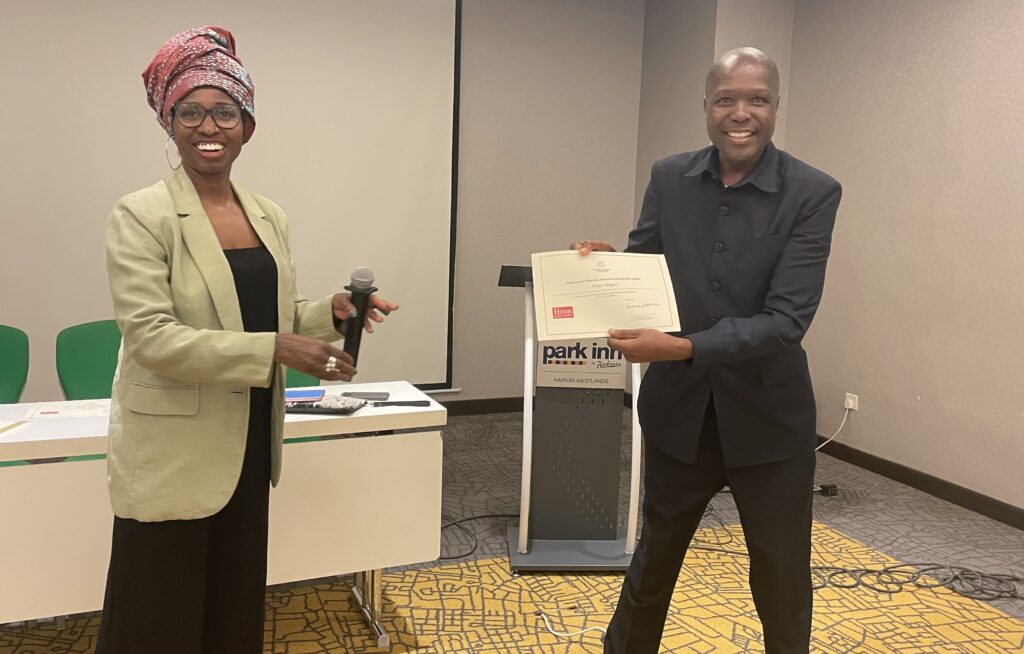
Peter Ongera is an award-winning journalist, entrepreneur, experienced business trainer, coach and mentor based in Nairobi, Kenya.
More Impact Stories
View All Impact Stories
Securing protections for marine protected areas in Europe
Pro bono legal research by Hogan Lovells…
Read More
Protecting independent media under legal threat in El Salvador
SembraMedia used pro bono legal advice…
Read More
Improving access to philanthropic giving across Asia
Pro bono support provided by Dechert LLP helped AVPN…
Read More
Pro bono as a force for good: An interview with Cynthia Mudaye
Cynthia Mudaye from Mudaye & Co….
Read More
How in-house counsel is shaping the future of pro bono
Representatives from MSD explore how to strengthen the…
Read MoreBuilding the pro bono infrastructure needed across East Africa
Cathy Mputhia, CEO of C. Mputhia…
Read More5 tips to building a robust pro bono programme
Katie Marquart, Partner and Pro Bono Chair at Gibson Dunn, shares…
Read More
Shielding community journalism: How pro bono legal expertise broke the cycle of self-censorship for one Kenyan radio station
How pro bono legal support helped Kenyan radio station Radio Domus update editorial policies, ending…
Read More
Combatting international corruption: The pro bono research behind the landmark Foreign Extortion Prevention Act
Discover how pro bono legal expertise has created truly impactful tools for fighting corruption.
Read More
The value of pro bono: Radio Domus
Radio Domus FM is a non-profit youth-centric, 24-hour community radio station in Kajiado…
Read More

