


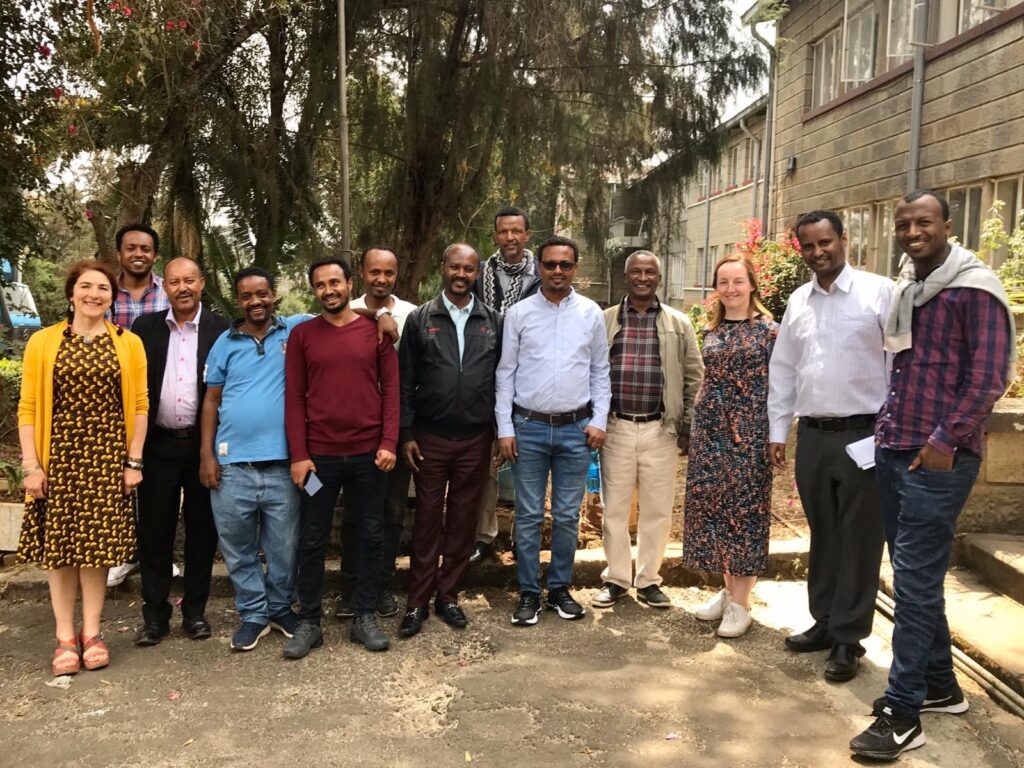
A group of 11 journalists and NGO workers gathered in Addis Ababa, Ethiopia in early March for a pilot training of the Thomson Reuters Foundation’s new radio journalism course on how to report on the worst forms of child labour (WFCL). The four-day course was the first of a series of media and legal trainings to be led by the Foundation, as part of its membership in the Partnership Against Child Exploitation (PACE) consortium.
The PACE consortium, a cross-sector partnership of six organisations, is funded by the UK’s Department for International Development (DFID), and works to combat the exploitation of children in the worst forms of child labour – including prostitution, forced labour, hazardous work or associations with armed groups – in Ethiopia, the Democratic Republic of the Congo and the Central African Republic. Activities of the consortium range from supporting journalists, policymakers and law enforcement officials to working with the private sector to mapping supply chains.
The training was delivered by Thomson Reuters Foundation trainers from Ethiopia, the UK and Italy, to participants from partnering media organisations in Ethiopia, comprising: the Ethiopian Broadcasting Corporation, Amhara Mass Media Agency, the Ethiopian Broadcasting Authority and World Vision Ethiopia. The aim of the training was to equip media professionals with the skills necessary to approach the sensitive topic through radio journalism while protecting the victims of child labour.
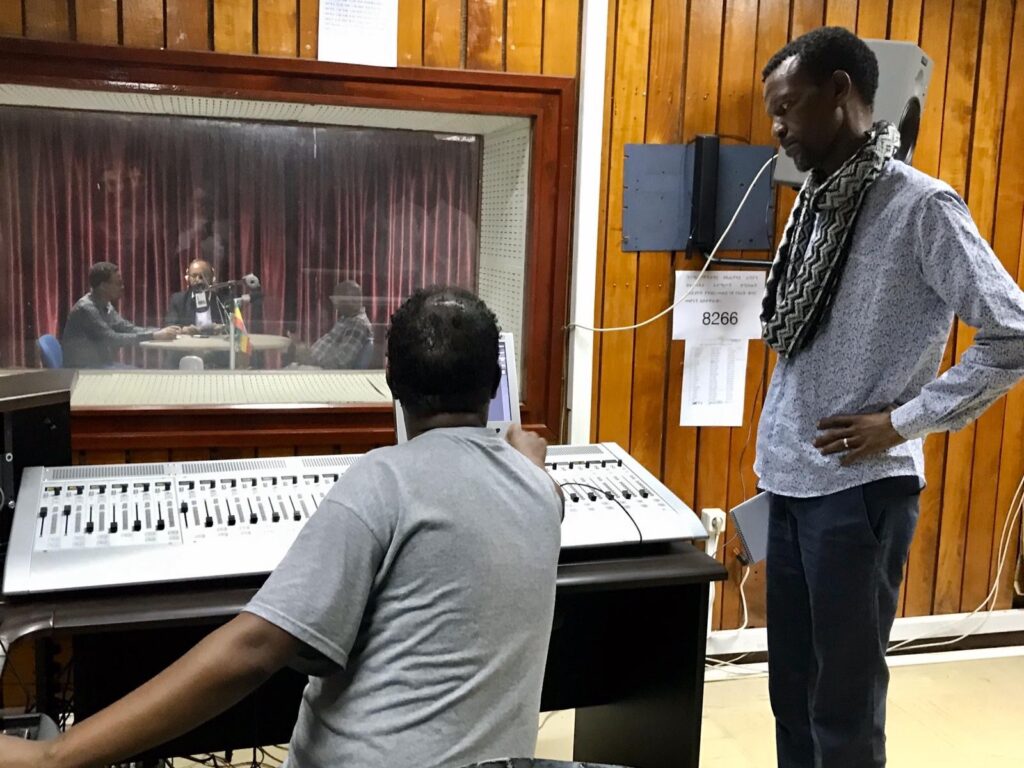
The training kicked off with a presentation from an Ethiopia Ministry of Labour and Social Affairs representative, who discussed key data findings, common challenges in tackling child exploitation and the media’s important role in the fight against the WFCL.
According to the Ethiopia National Child Labour Survey, half of children aged 5 to 17 are engaged in economic activities, and one-fifth of them are not attending school. The report also highlighted how the media has a great potential to mobilise stakeholders and community organisations to prevent the WFCL and to raise awareness of the extent of the issue across Ethiopia.
During the training, participants were invited to provide feedback on aspects of the course such as content, module design and approach, which will be used to shape future courses. Dereje Moges, News Department Head from Amhara Mass Media Agency, said: “The pilot training on the radio journalism course is crucial and important to further develop journalism training materials for the Ethiopian context, and to establish journalist networks that can then create guidelines.”
This year, the Thomson Reuters Foundation will continue to work with local media and legal partners across the three African countries, alongside the other consortium members, to raise awareness about the WFCL and to foster safe environments for children.
To keep up to date with the latest developments, learning materials and news articles from the consortium, visit the PACE website. You can also contact the PACE consortium here.
Share


Sign up to our newsletter
More News
View All
“I had a love-hate relationship with journalists…”
A journalist and a content…
Read More
Working behind the scenes: Reflections from the 5th African Business and Human Rights Forum
A behind-the-scenes view of 5th African Business and Human Rights Forum -…
Read More
World News Day: every $1 invested in journalism can return $100 to society. So why are we letting it collapse?
Defending journalism is not just a moral responsibility. It’s an economic and democratic…
Read More
AI legislation is important in upholding universal human rights
Our Director of Responsible Business,…
Read More
How civil society can counter the rise of legal restrictions across Latin America
New…
Read More
Legal support: a lifeline for civil society and democracy
How democracies become stronger when civil society…
Read More
How upholding workers’ rights builds democratic resilience
How businesses treat their workers…
Read More
Protecting independent media is protecting democracy
How protecting independent media protects democracy itself.
Read More
What legal risks do content creators face? 5 key considerations for influencers
Content…
Read More
What the EU’s Procurement shift could mean for workforce disclosure
In the wake of the…
Read More

