


Amid a climate of escalating threats and targeted attacks on journalists, the Thomson Reuters Foundation has today launched a new tool to strengthen their resilience to online violence.
TRFilter is the first tool for journalists and media practitioners to document and manage online harassment and abuse, enabling them to regain control of their social media feeds, take action against perpetrators, and protect their wellbeing.
Developed in partnership with Google’s Jigsaw, TRFilter syncs with the user’s Twitter account and uses machine learning technology to automatically recognise and flag harmful comments. It limits journalists’ exposure to abusive content by allowing them to hide comments and block or mute accounts at scale, without reviewing the content. The tool also allows users to create reports to download and share with third parties as needed, for example their employer or law enforcement.
While many journalists are harassed in deliberate efforts to control the free flow of information, women are disproportionately affected. Nearly three-quarters of women journalists have experienced online violence; threats include physical and sexual violence, and even death threats. This barrage of abuse – intended to discredit or silence journalists – can take a significant toll on the victims, impacting their mental health, affecting their physical well-being and leading to self-censorship. Current guidance often points to users limiting their social media activity or asking a third party to filter the harmful content when they feel distressed.
“After months of work alongside our partner, Jigsaw, I am excited to launch access to a tool that will empower journalists and media practitioners targeted by online violence around the world,” said Chief Executive Office of the Thomson Reuters Foundation, Antonio Zappulla.
“Journalists’ mission of accurate and independent reporting is integral to the survival of a democratic society. It is imperative they have access to practical solutions that match the rapid evolution of the digital and legal warfare used to silence them.
“The Foundation’s extensive experience of collaboration with global partners, combined with our unique ability to leverage the twin engines of media and the law, places us at the centre of international expertise to support media freedom and defend human rights. We will continue to work tirelessly to protect journalists and the future of independent media, to strengthen free, fair and informed societies.”
With a legacy of more than 30 years working to bolster the ecosystem for independent media around the world, TRFilter is the latest in a suite of initiatives that the Foundation, in collaboration with partners, has pioneered to offer journalists practical solutions to defend their mission of reporting the truth and protect them from persecution.
As women journalists report missing work to recover from incidences of harassment, quitting their jobs, and even leaving the profession altogether, this scourge of online violence has become a workplace safety issue. Last year, the Foundation partnered with UNESCO, the International Women’s Media Foundation and the International News Safety Institute to develop a range of practical and legal tools for journalists, media managers and newsrooms to address the challenges experienced by reporters and media workers and strengthen responses to online and offline harassment. In addition to English, new versions of these guides have been made available in six languages – Russian, Arabic, French, Italian, Spanish and Chinese.
From “fake news” and disinformation laws to false allegations of fraud, corruption and breaches of copyright, laws continue to be weaponised to crack down on press freedoms. The Legal Network for Journalists at Risk (LNJAR) strategically coordinates the different legal services offered by organisations that work to protect journalists and independent media outlets. From urgent legal representation to ongoing assistance for the duration of a case, to efforts to improve the legal environment in which the media operates, the LNJAR provides a single-entry point into an ecosystem of support.
Share


Sign up to our newsletter
More News
View All
From competitors to collaborators: How AI training brought two South African newsrooms together
In partnership with Microsoft, we supported four newsrooms in South Africa with…
Read More
How one newsroom built an AI fact-checking tool for Zambia’s Election
In collaboration with…
Read More
AI is the biggest reallocation of capital in a generation. Here’s why that should concern all of us
AI has led to a fundamental restructuring of economic power, raising questions that may…
Read More
Three converging pressures facing civil society – and what it will take to respond
What civil society organisations in our TrustLaw network are telling us…
Read More
Democracy is in retreat. Here’s why that should alarm us all
Three powerful and interconnected…
Read More
Collaboration between reporters and content creators is essential for defending informatifon integrity
At workshops in Kenya, the Thomson Reuters Foundation saw what true co-operation between…
Read More
“I had a love-hate relationship with journalists…”
A journalist and a content…
Read More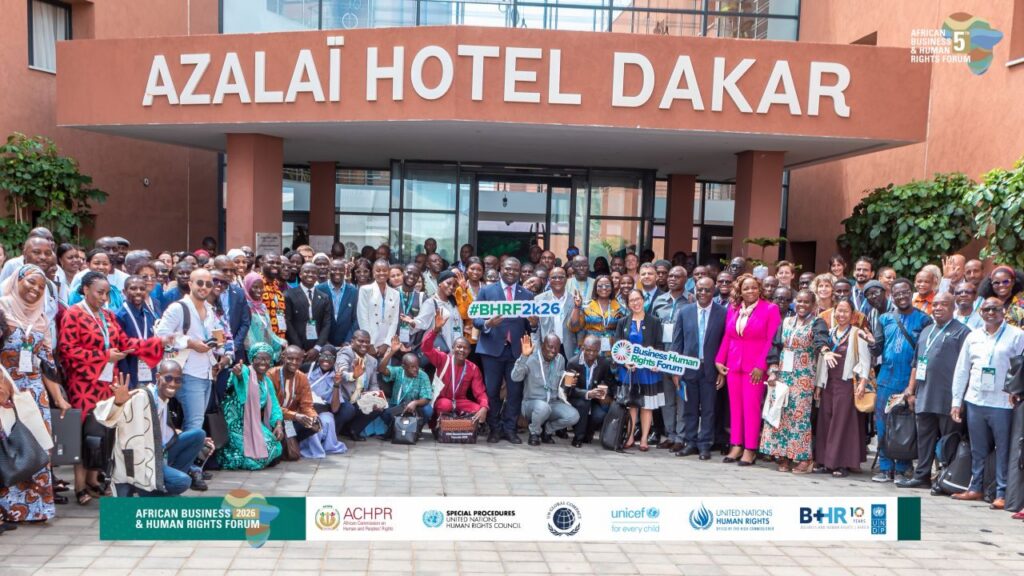
Working behind the scenes: Reflections from the 5th African Business and Human Rights Forum
A behind-the-scenes view of 5th African Business and Human Rights Forum -…
Read More
World News Day: every $1 invested in journalism can return $100 to society. So why are we letting it collapse?
Defending journalism is not just a moral responsibility. It’s an economic and democratic…
Read More
AI legislation is important in upholding universal human rights
Our Director of Responsible Business,…
Read More

