


At Trust Conference 2026, I set out what civil society organisations in our TrustLaw network are telling us about the challenges they face – and why an integrated response matters more than ever.
Civil society is facing a defining moment.
The organisations that defend human rights, support independent media, advance access to justice and protect the environment are operating under unprecedented pressure. The challenges are coming from every direction. Funding, legal and technological threats are converging to create a fundamentally different operating environment for civil society.
At Trust Conference, I set out three trends shaping that environment, drawing on our 2025 Rising Pressure, Rising Needs survey of nearly 150 civil society organisations (CSOs) across our global TrustLaw network.
The core takeaway: civil society is facing rising operational and legal pressures at precisely the moment when its capacity to respond is under greatest strain.
The twelve months since have reinforced that picture. Through our work with hundreds of CSOs across the TrustLaw network and the launch of our Civil Society Resilience Accelerator, three trends have come into sharp focus. They are shaping our response, and I hope they can inform yours.
Funding cuts at the very moment civil society is needed most
Loss of funding is the leading concern for CSOs worldwide. 74% of the organisations we surveyed worldwide cited it among the top three most serious risks they face.
The scale is historic. OECD data shows official development assistance fell by 23.1% in 2025 – the largest annual contraction on record, bringing it to its lowest level in a decade. The knock-on effect on frontline work has been severe: take the case of the Danish Refugee Council, which had to close several country offices and lay off around 2,000 staff following US funding cuts. For millions of people displaced by conflict, disaster and climate change, that is a devastating loss of life-saving aid.
The threat is also becoming increasingly structural. A global spread of laws criminalising foreign funding is deterring donors and choking funding pipelines. With aid cuts reducing the money available, these laws are making it harder for what remains to reach the organisations that need it most.
Legal and regulatory pressure is intensifying
Nearly 30% of the CSOs we surveyed said these laws were the most serious risk facing their organisation. Less visibly, compliance requirements themselves are becoming a significant burden.
Governments are deploying increasingly sophisticated legal tools – restrictive NGO laws, SLAPPs, criminalisation of peaceful protest, expanded surveillance powers and the misuse of counterterrorism legislation. Many organisations now spend as much time navigating compliance and defending themselves legally as they do serving the communities they exist to support.
The common thread: the law – which should protect civic participation – is increasingly being weaponised against those who defend rights and hold power accountable.
Technology is changing the playing field faster than civil society can keep up
AI is making disinformation cheaper, faster and more convincing. Digital surveillance, cyberattacks and online harassment are exposing organisations, staff and partners to growing risks. For those challenging powerful interests, these threats can be especially acute – eroding trust, compromising security and making it harder to speak out and do the work safely.
Our survey respondents are at the sharp end of this: online safety and cyber threats ranked as the third greatest risk facing their organisations.

The attacks are getting cheaper, they are becoming more personal, and they are more outsourced. AI is amplifying all of these.
But defending against misuse is only part of the challenge. Another is keeping pace. Many CSOs simply do not have the funding, expertise or infrastructure to use AI safely and effectively. They are being asked to navigate complex questions around data, bias, intellectual property and responsible use – while the technology itself keeps evolving.
The result is a growing technology divide: those seeking to strengthen democracy are struggling to keep pace with the very technologies increasingly used to undermine it.
Why an integrated response is now essential
Faced with these converging pressures, a critical gap has emerged in how civil society is supported.
Traditional interventions tend to be funder-led and focused on individual disciplines – legal, financial, or communications – rather than built around an organisation’s broader vision of resilience and sustainability.
What’s needed is a more integrated approach. One that helps CSOs detect compliance risks before they become crises. That provides communications support when organisations are under pressure, not just when things are going well. That connects financial sustainability planning to the legal and governance realities organisations are navigating. And that provides support on AI and digital security – areas of growing and largely unmet need.
Most importantly, these elements need to work together, not be delivered in silos by providers who may not communicate with one another. Truly effective support must be built around a single organisation’s context, priorities and operating reality.
This is the thinking behind the Civil Society Resilience Accelerator, which we launched earlier this year. Drawing on our decades of experience supporting CSOs and independent media in complex environments, it starts with a diagnostic tool that maps an organisation’s vulnerabilities and opportunities across multiple dimensions. We then build support around those findings – enabling CSOs to actively shape their own roadmap to stability and impact.
What this means for you
If you lead or work for a CSO facing these pressures
Legal support can help you to navigate complex and evolving legal and regulatory restrictions, helping to safeguard the resilience of your organisation. Explore how our global pro bono network, TrustLaw, can connect you with leading law firms around the world.
If you’re a funder or partner interested in supporting civil society resilience
We are looking for partners to collaborate with in supporting future cohorts of our civil society resilience accelerator programme. If you’re interested in discussing opportunities, please get in touch with our Head of Corporate Partnerships, Paul Grundy.
Legal pressures will continue. Technology will keep evolving. Funding landscapes will keep shifting. Political environments will remain contested.
But if we invest, together, in legal, digital, financial and operational resilience, we can ensure that civil society remains capable of meeting the challenges of the next decade.
Because when civil society thrives, democracies become stronger. Human rights are better protected. And justice becomes more accessible.
That is not simply an aspiration. It is a shared responsibility
.
Share


Sign up to our newsletter
More from us

Legal support: a lifeline for civil society and democracy
How democracies become stronger when civil society…
Read more
TrustLaw
Our global pro bono legal network, TrustLaw, works with leading law firms and corporate legal teams to facilitate free legal support,…
Read more
Why existing support for civil society can’t solve this crisis
Most support wasn’t designed…
Read more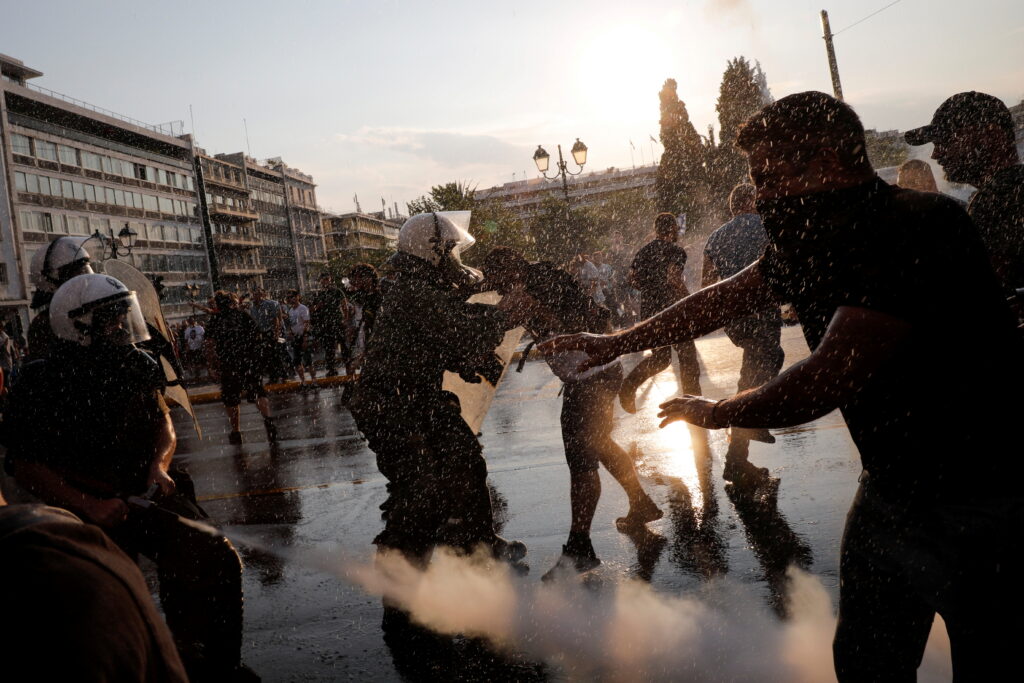
Civil society is being cut off and locked down at the same time
From Georgia to Venezuela, civil…
Read more

