


The legal threats eroding South Africa’s hard-won freedoms, and how to address them.
Overview
South Africa has a vibrant media sector, and in 2026 led Africa in the World Press Freedom rankings. However, half of journalists we surveyed had faced legal threats because of their work.
Safeguards in principle often do not translate into protections in practice – and this growing gap leaves journalists in the country vulnerable.
We therefore partnered with ALT Advisory, in association with Power Law Africa, to investigate the challenges that journalists face and to explore ways to counter them.
Drawing on consultations with journalists, focus groups, extensive legal research and expert analysis, this report identifies four overarching threats to journalists in South Africa:
- the abuse of court processes,
- regressive and disabling legislation,
- technology-facilitated harms, and
- labour-related and sustainability challenges.
Our analysis shows that active legal abuses are compounded by regulatory gaps – especially around emerging issues such as generative AI – and weak enforcement of existing rights and protections.
The challenge is not one single law or institution, but the cumulative burden of intersecting legal, economic and digital issues.

I don’t want to lose my house and life savings over a story.
Alongside analysis that builds the evidence base for action, the report offers targeted recommendations to address each threat, and to uphold and strengthen media freedom in South Africa.
This is the third report in a series mapping legal threats to journalists, building on the 2023 global “Weaponizing the Law: Attacks on Media Freedom” report, and the March 2026 report into weaponising the law in Kenya.
Share


Download the report


Complete to continue
Share your details to gain instant access to this resource.
Report snapshot
of journalists surveyed have faced legal threats because of their work
The last five years have seen an increase in the strategic use of legal tools to silence and intimidate journalists.
highlighted the need for stronger labour protections
Weak and fragmented labour protections leave many journalists vulnerable, particularly freelancers and contract workers.
of journalists feel “somewhat confident” about the courts’ ability to protect them
The majority of journalists we spoke to did not have confidence in the courts to protect those covering sensitive or controversial topics.
Key legal threats

Abuse of court processes

Regressive and disabling legislation

Technology-facilitated harms

Labour-related and sustainability challenges
Core recommendations
Upholding constitutional rights and media freedoms in the face of complex and interconnected threats requires a coordinated and collaborative approach across South Africa’s media freedom ecosystem. The report highlights the need to:
- Strengthen safeguards within the legal system, including clearer procedures and regulations to identify and address the abuse of court processes.
- Review and reform legislative frameworks that undermine media freedom in practice.
- Develop stronger protections for journalism, including around surveillance, access to information, platform accountability and the financial sustainability of independent media.
- Support and sustain civil society responses, including strategic litigation, monitoring and documenting threats, and providing legal support for journalists at risk.
Watch the webinar
We recently held a webinar with media freedom experts and legal practitioners, to consider how lawfare is evolving in East and Southern Africa. The panel explored how national, regional and continental mechanisms can better protect journalists and defend the public’s right to trusted information.
More from us

Weaponisation of the Law
Our suite of resources identifying key legal threats to the profession of journalism.
Read more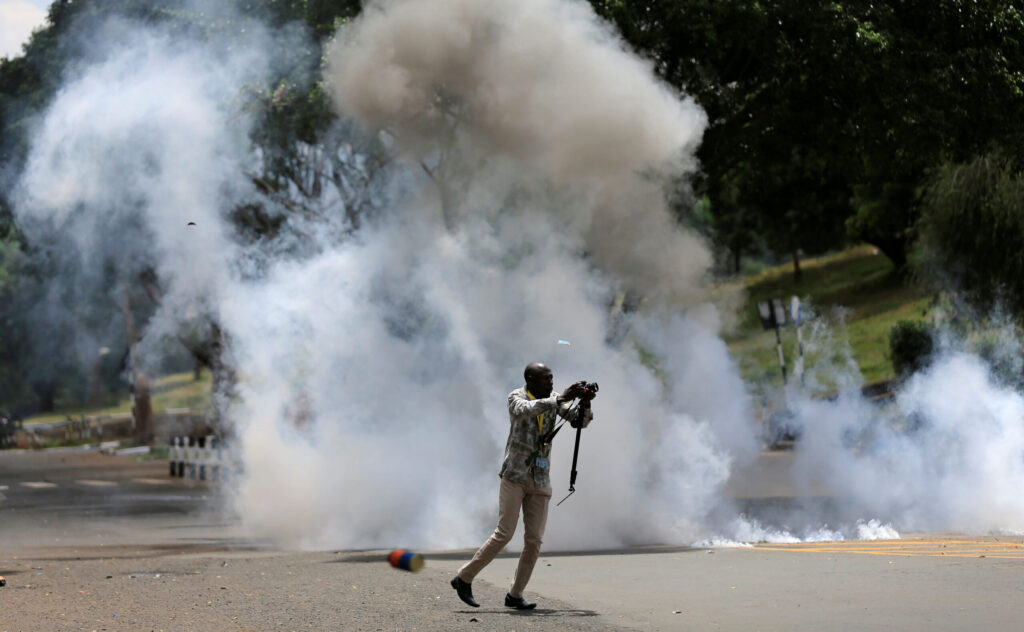
Weaponising the law: Threats to media freedom in Kenya
Our latest report exploring the legal threats...
Read more
Weaponising the Law: Attacks on Media Freedom
Our 2023 report exploring how the law is being weaponised to silence...
Read more
Before you publish: Kenya, Zambia, and South Africa legal pre-publication review guide for journalists
This guide assists journalists by providing a checklist of factors to consider before...
Read more

