


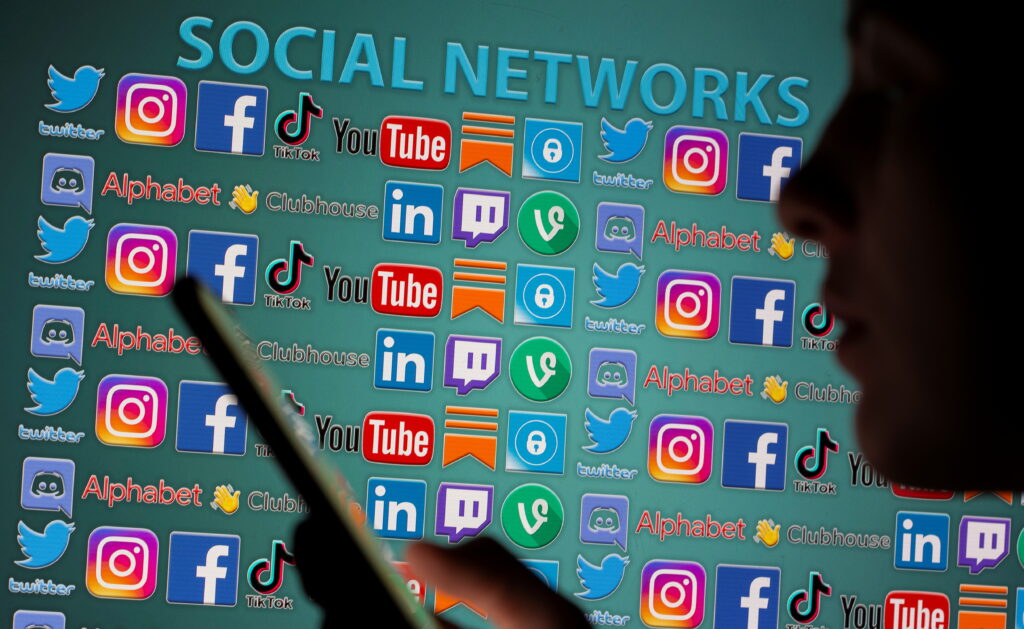
From the 2nd to the 23rd of November 2021, the Thomson Reuters Foundation held an online ‘Personal Branding and Online Presence’ programme for journalists in the Asia-Pacific region. The training focussed on helping participants to strengthen their online presence and build an authoritative brand on social media, as well as how to stay safe online.
Below is a reflection from Corinne Podger – one of the programme’s trainers – following completion of the course:
Last year I taught online journalism for a semester at an Australian university. I was struck by how confident my students were in using social media and developing online portfolios of their work. By contrast, journalists in developing countries often lacked a strong online presence, and it counted against them.
Even though these reporters work in some of the most challenging environments, they are hard to find online and on social media, and their profiles don’t always stand out. It makes them less likely to be invited to freelance for international outlets or to speak at conferences and events. They may also struggle to persuade those with a high-profile to agree to an interview.
In November I was invited to develop a new course for the Thomson Reuters Foundation that aims to level the playing field.
The month-long ‘Personal Branding and Online Presence’ programme – in which 13 journalists from Thailand, India and Bangladesh took part – focused on helping participants to define their personal brand and create stand-out profiles on social media through group sessions, assignments, and one-to-one mentoring.
The course was delivered with co-trainer Anu Harchu, a Mongolian journalist-turned-influencer, who has thousands of followers on her YouTube and Instagram channels.
Together, we worked with the participants to help them define their audiences and develop personal brand statements, create stand-out social media profiles, film and edit short stories and pieces to camera with a smartphone, and grow online audiences while protecting their editorial independence.
We were delighted to have Jacqueline Comer, Co-founder and Chief Product Officer of Areto Labs, join us to share advice on staying safe online. Each participant also received a Canva membership to help them create online brand assets.
Another popular module was learning how to pitch to speak at international journalism conferences. This was particularly relevant as, with many events moving online during the pandemic, there are more opportunities for journalists to build international exposure without having to travel.
Feedback on the programme has been extremely positive. Zoglul Kamal, Deputy News Editor at The Business Post in Bangladesh, called it “an eye-opener”.
“It taught me how to utilise social media as a journalist. The knowledge and expertise gained from this training have helped me to boost my online presence and [this is] proving to be very useful for my organisation too”.
Fellow Bangladeshi journalist Farhana Nila spoke of how the course helped her to understand how to use social platforms for professional purposes: “From this training, I learnt how to make my own video content and now I want to relaunch my YouTube channel”.
Srividya RK, a reporter from India, has already seen an impact since learning how to film her own content with a smartphone and using Canva to create social media assets and posts: “I’ve gained over 100 followers after identifying my target audience and incorporating more suggestions from the mentors”.
Participants also highlighted how the programme has boosted their confidence. Pinaki Das, a journalist from North East Live in India, said: “I now regularly update my social media channels to make my presence felt. My followers are growing fast, and I am grateful to the organisers and the entire team who brought [about] this change in me”.
Sarada Lahangir, an award-winning video journalist from India, said the programme helped her to feel less shy about promoting her work online: “As a journalist in the field, I am really active, but when it came to social media, I had a notion that if I posted something it would be a ‘promotional’ kind of thing. After this workshop, I came to understand that it can be used as a professional tool where I can share the stories that I cover and reach people worldwide”.
Share


Sign up to our newsletter
More News
View All
Constitutional protections are not enough to defend press freedom: what our research in South Africa shows
South Africa’s constitutional protections for press freedom are among the strongest on the…
Read More
New report reveals the extent of EU AI Act influence
Our research on 3,000 companies shows the EU AI Act is…
Read More
What compliance with the EU AI Act actually looks like
Five things every Compliance expert needs to consider…
Read More
Civil society is being cut off and locked down at the same time
From Georgia to Venezuela, civil…
Read More
What’s driving pro bono growth in Europe?
As demand for pro bono legal support surges across Europe, the Global Pro Bono…
Read More
Why a free press is the world’s best defence against impunity
Press freedom decline drives…
Read More
When regulators, investors and industry sit down together: Our Brussels roundtable on AI governance
A candid conversation about responsible AI – and how far most companies still have to…
Read More
Introducing the Openly newsletter: Global LGBTQ+ news, straight to your inbox
Since 2018,…
Read More
New report collates evidence on value of journalism for growth and security
The Thomson…
Read More
2026 World Cup: Using football’s global reach to advance human rights
With the 2026 FIFA…
Read More

