CTP

With the outbreak of COVID-19 around the world there has never been a more urgent need to protect media freedom. As countries struggle to balance public safety and civil liberties, violations of freedom of expression, censorship and surveillance practices have emerged.
TrustLaw in collaboration with the Committee to Protect Journalists (CPJ) developed a brief comparative analysis identifying measures implemented by Bolivia, Brazil, Dominican Republic, El Salvador and Peru in response to the COVID-19 pandemic which negatively impacted, or have the potential to restrict, freedom of expression and of the press.
The report analyzes new pandemic response measures, including, laws, executive orders, policies and other legal measures adopted by governments in these countries which have already affected or have the potential to restrict freedom of expression, of the press, and access to information. It also explores some of the reactions of civil society and journalists to these new rules, possible penalties for sharing “fake news”, and relevant international standards.
We believe this report is of paramount importance and will help raise awareness on the implementation of such kind of measures in Latin America.

Como consecuencia de la propagación del COVID-19 a nivel mundial se ha desatado la urgencia de proteger la libertad de medios. Mientras que los Estados intentaban equilibrar la seguridad pública y las libertades civiles, se produjeron violaciones a la libertad de expresión, censuras y prácticas de vigilancia.
TrustLaw junto con el Committee to Protect Journalists (CPJ) elaboraron un breve análisis comparativo para identificar aquellas medidas implementadas en Bolivia, Brasil, República Dominicana, El Salvador y Perú como respuesta a la pandemia ocasionada por el COVID-19 y que impactaron negativamente o podrían restringir la libertad de expresión y de prensa.
El informe analiza las medidas adoptadas en respuesta a la pandemia, que van desde leyes, decretos, políticas a normas que han afectado, o son pasibles de afectar, la libertad de expresión y de prensa y el acceso a la información. Además, aborda algunas de las reacciones de la sociedad civil y periodistas frente a ellas, posibles sanciones a quienes difunden “noticias falsas” y estándares internacionales de relevancia.
Creemos que este informe es de suma importancia y ayudará a generar conciencia acerca de la implementación de este tipo de medidas en América Latina.

Details

Countries

BoliviaBrazilDominican RepublicEl SalvadorPeru

Languages

EnglishSpanish

Download Report

Download pdf: Download Report

Tags

CMP

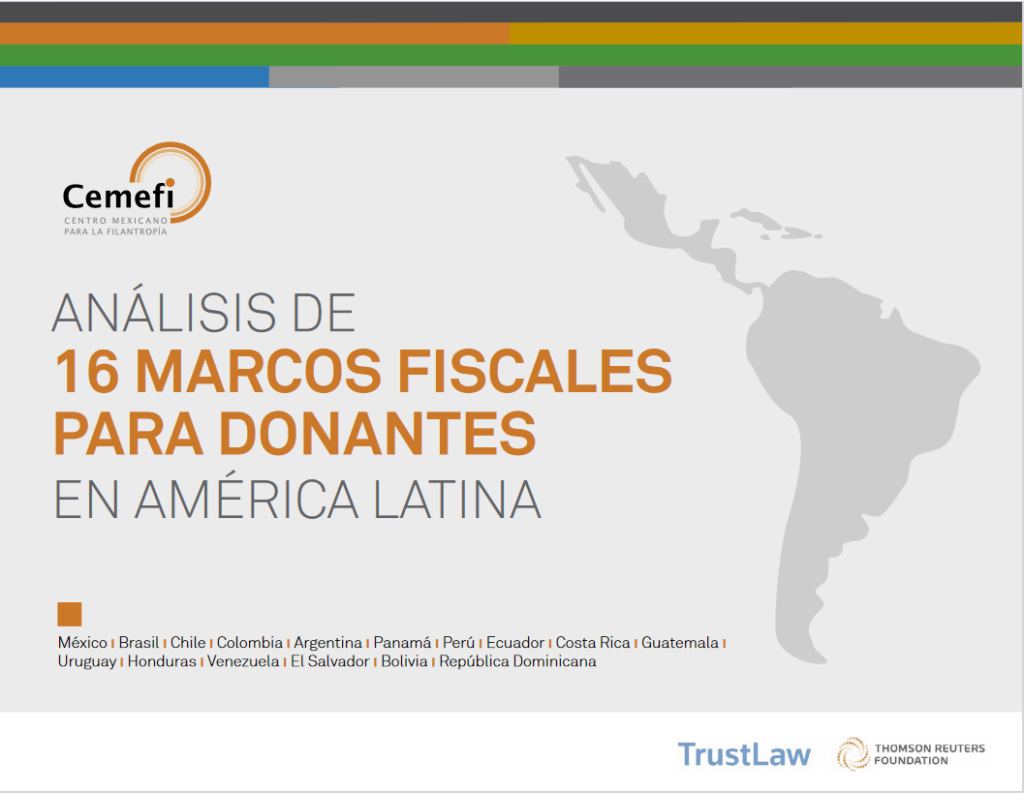
TrustLaw in collaboration with the Centro Mexicano para la Filantropía (CEMEFI), produced a report which collated tax frameworks for donors and grantees in Latin America. The study includes an analysis of the tax laws of Argentina, Bolivia, Brazil, Chile, Colombia, Costa Rica, Ecuador, El Salvador, Guatemala, Honduras, Mexico, Panama, Peru, the Dominican Republic, Uruguay and Venezuela.

Details

Countries

ArgentinaBoliviaBrazilChileColombiaCosta RicaDominican RepublicEcuadorEl SalvadorGuatemalaHondurasMexicoPanamaPeruUruguayVenezuela

Languages

EnglishSpanish

Download Guide

Download pdf: Download Guide

EEB

Whistleblowing is an increasing practice used by employees and private individuals to call out corporate and government malpractice. This report is a summary of legal protections and risks faced by whistleblowers in Belgium, England & Wales, France, Germany, Italy, Spain and the European Union institutions.

Details

Countries

BelgiumUnited KingdomFranceGermanyItalySpain

Languages

English

Download Report

Download pdf: Download Report

Tags

Wealth of Nations has produced an Oil and Gas Reporting Handbook, aimed at providing advice and guidance to journalists reporting on the industry. This easy-to-read but comprehensive guide covers an array of topics, from the different types of oil and gas and the multitude of players involved in their production, to revenue streams and their management, corruption and environmental and social risks. The handbook also offers guidance on information and data sourcing.

Download PDF

Download pdf: Download PDF

HI

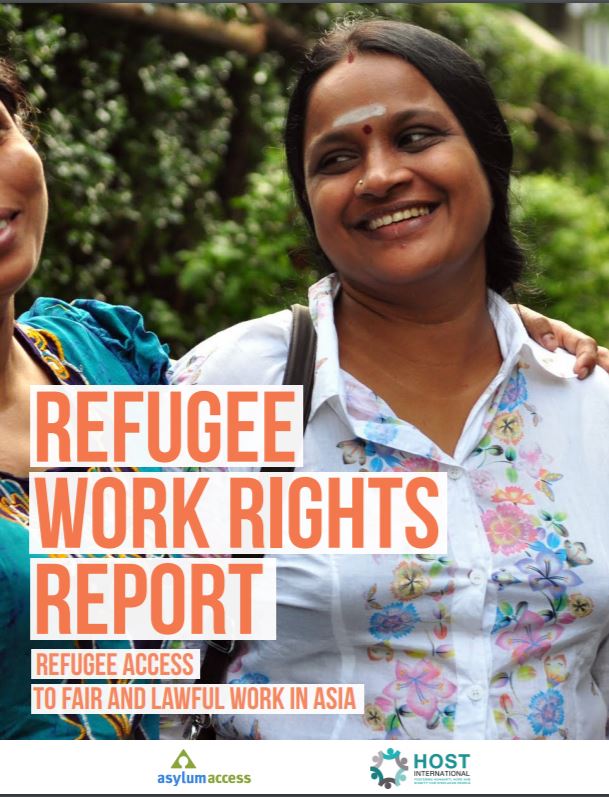
Access to work rights and economic opportunities are crucial to becoming self-reliant and securing a sense of dignity. Work rights are also a prerequisite to a refugee meaningfully contributing to – often bolstering – their host community economy. The legal right to work is an effective, long-term strategy to integrate refugees and benefit from their contributions while other permanent solutions continue to be explored. Unfortunately, accessing lawful employment is challenging and often impossible for refugees.


According to UNHCR, as of the middle of 2018, Asia hosted 9.4 million refugees, internally displaced persons (IDPs) and stateless people. However, out of all 27 South, Southeast and East Asian countries, only 7 (China, Japan, South Korea, Cambodia, Timor Leste, Afghanistan and the Philippines) have signed the 1951 Convention Relating to the Status of Refugees. More importantly, many parts of Asia are experiencing acute labor shortages. East Asia would have to import 275 million people between the ages of 15 and 64 by the year 2030 to maintain the current share of its population who are of working age.


From the 2016 report by Philippe LeGrain — the most comprehensive study available on how refugees contribute to host countries — found that refugees “help create jobs, raise the productivity and wages of local workers, lift capital returns, stimulate international trade and investment, and boost innovation, enterprise and growth.” Asian countries hosting refugees and asylum seekers therefore have an opportunity to tap into their pool of informal workers and incorporate them into a structured workforce that could benefit their economies. This opportunity can only be unlocked if refugees’ work rights are respected and protected.


In light of this, TrustLaw connected HOST International and Asylum Access to six legal teams to examine the rights of refugees to work safely and lawfully in eight countries in Asia: Bangladesh, India, Indonesia, Japan, Malaysia, the Philippines, South Korea and Thailand. It features country-specific scorecards examining policies and practices in each country. It is hoped that this report will provide all stakeholders with a clear baseline and starting point for engaging with refugee work rights in Asia.


The research was led by the in-house team at Nokia with support from Baker McKenzie, Bae, Kim & Lee LLC, BTG Legal, DLA Piper and SyCip Salazar. Due to the collaborative nature of the project, it won the TrustLaw Collaboration Award for 2019. The report was also formally launched at the Global Refugee Forum in December 2019.

Download Report

Download pdf: Download Report

Tags

I

This report compares the relevant legal frameworks on electronic commerce in Nicaragua, Panama, Honduras, Costa Rica, Dominican Republic, Guatemala, and El Salvador, with the aim of raising awareness of the status of Central American legislation on the matter. The guide is written in Spanish.

Details

Countries

Costa RicaDominican RepublicEl SalvadorGuatemalaHondurasNicaraguaPanama

Languages

Spanish

Download Report

Download pdf: Download Report

Tags

TRF

The Guide provides an overview of the range of legal structures that are available to social entrepreneurs in Ireland, as well as the advantages and disadvantages associated with each. The Guide is aimed at social entrepreneurs regardless of whether they already have a well-established social enterprise or are just starting out.

Details

Countries

Ireland

Languages

English

Download Guide

Download pdf: Download Guide

ABD

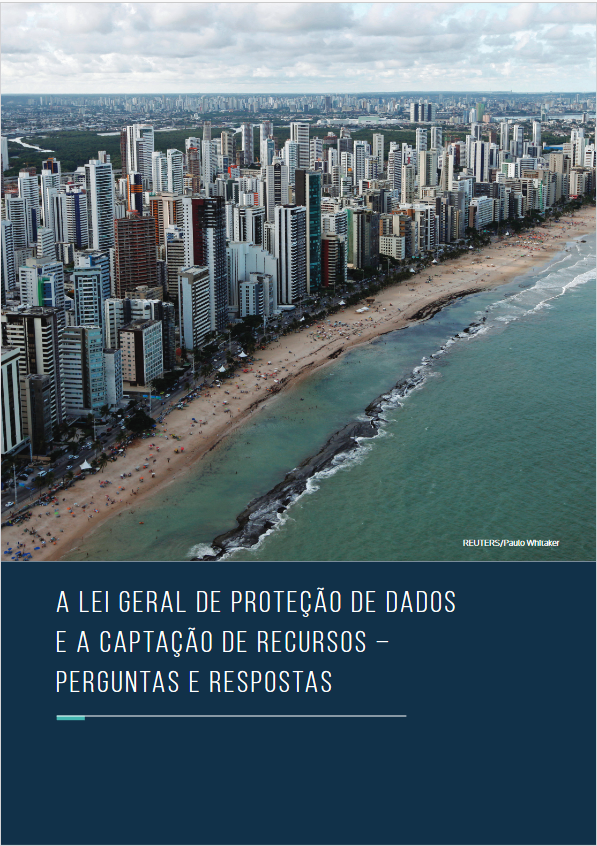
October 2020: In collaboration with the Associação Brasileira de Captadores de Recursos and Koury Lopes Advogados (KLA), TrustLaw has published this guide on the new Brazilian “General Data Protection Law and Fundraising – Questions and Answers”, which analyzes the main changes to the law and answers several questions related to how the new law impacts fundraising.


Digital rights are a new frontier of human rights. The Thomson Reuters Foundation (TRF) raises awareness of the impact of technology on people and society. Through its global pro bono legal service, TrustLaw, TRF provides vital tools and resources to environmental, humanitarian and social organizations, including guidance on navigating the often uncharted and challenging territory of data regulation and legislation.
In August 2018, Brazil passed a General Data Protection Regulation, lei Nº 13.709, which became effective in September 2020. This new law impacts the work of civil society organizations in Brazil, who are in need of guidance as to how the law affects them, their fundraising strategies and their communications with donors.


We hope this publication becomes a valuable tool to support civil society organizations in Brazil to navigate the new data protection law and to empower them to act with confidence when dealing with personal data so that they can ultimately achieve their fundraising goals and become financially sustainable.

Details

Countries

Brazil

Languages

Spanish

Download Guide

Download pdf: Download Guide

Tags

FAT

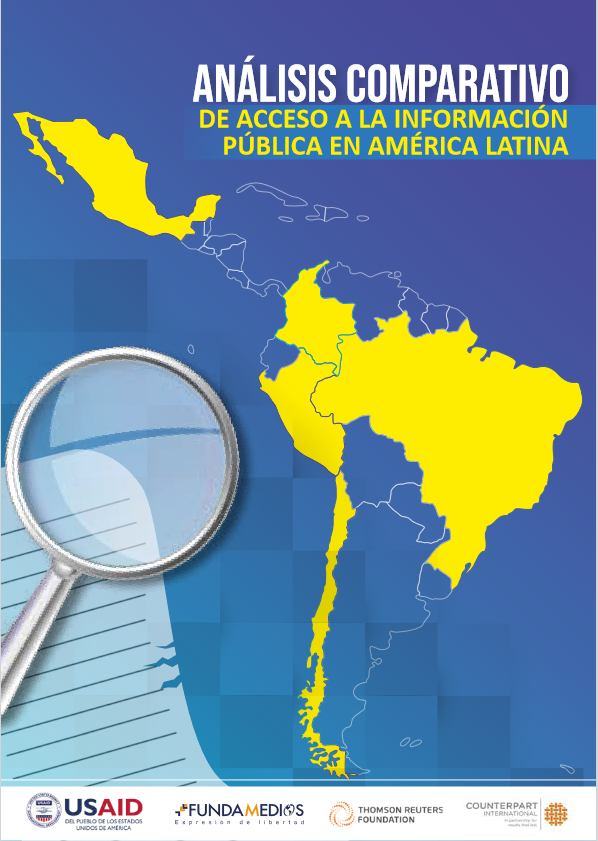
This report compares how access to public information is regulated in Brazil, Chile, Colombia, Ecuador, Mexico, and Peru, with the aim of improving Ecuadorâ’s legal framework on the matter. The guide is written in Spanish.

Details

Countries

BrazilChileColombiaEcuadorMexicoPeru

Languages

Spanish

Download Report

Download pdf: Download Report

Tags

NHL

The National Homelessness Law Center is the only national organization dedicated solely to using the power of the law to end and prevent homelessness and to protect the rights of people experiencing homelessness in the United States of America. They aim to serve America’s more than 3.5 million homeless families, children and individuals through high impact litigation, public awareness campaigns, policy advocacy, and legal support of local programs that serve the folks on the ground.


While state and federal laws have eliminated some of the barriers to voting for people experiencing homelessness, other obstacles remain, such as a mailing address as a prerequisite to register to vote. Those obstacles can be removed if people experiencing homelessness know their rights and learn ways to overcome the barriers. National Coalition for the Homeless’ campaign “You Don’t Need a Home to Vote” seeks to promote voting access for low income and homeless persons to ensure that people who are economically disadvantaged maintain a voice in shaping their future.


As part of this campaign, and to ensure people experiencing homelessness can fully exercise their right to vote, the National Homelessness Law Center decided to create a practical and user-friendly voting rights guide. Through TrustLaw, the Thomson Reuters Foundation’s global pro bono service, they were connected with pro bono lawyers at Goodwin to review the legislation applicable to election law and voting rights in all 50 U.S. States, as well as the federal legal framework, in order to produce a comprehensive and user-friendly “Know Your Voting Rights” Guide for people experiencing homeless across the country.

Details

Countries

United States

Languages

English

Download Guide

Download pdf: Download Guide