ES:

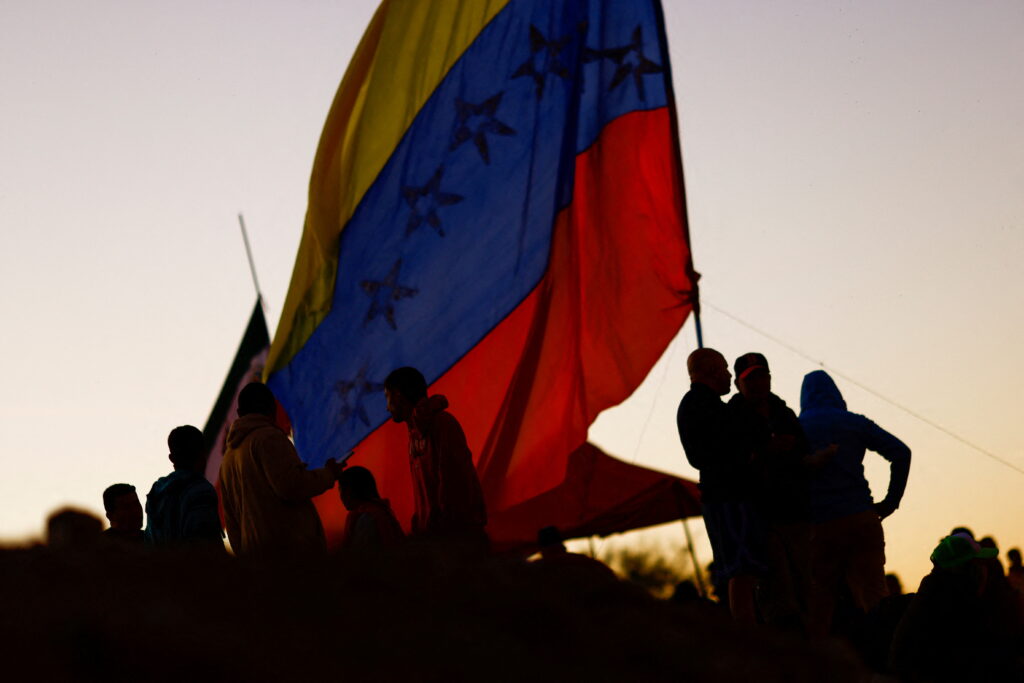
La crisis migratoria venezolana ha alcanzado dimensiones sin precedentes, convirtiéndose en uno de los fenómenos migratorios más significativos de la historia reciente de América Latina.

Argentina, con su tradición de acogida y hospitalidad, ha emergido como un destino crucial para muchos de estos migrantes. Con el objetivo de abordar esta compleja situación y facilitar la integración de los venezolanos en el país, se ha introducido un régimen simplificado para agilizar los procesos de regularización migratoria, así como una reforma a la ley de refugiados que busca reforzar el marco legal para garantizar una protección más robusta a quienes huyen de situaciones de violencia y persecución.

A través de TrustLaw, conectamos a la organización de derechos humanos, Promedehum, con expertos legales pare desarrollar esta guía que explora en detalle estas normativas migratorias y de asilo con el fin de proporcionar una orientación clara y accesible para todos los ciudadanos venezolanos en Argentina.

EN:

Simple Guide for Venezuelan Migrants and Asylum-seekers in Argentina

The Venezuelan migration crisis has reached an unprecedented scale, becoming one of the most significant in the recent history of Latin America.

With its tradition of welcome and hospitality, Argentina has emerged as a crucial destination for many of these migrants. To facilitate the integration of Venezuelans into the country, a simplified process has been introduced to streamline migration regularisation processes, as well as a refugee law reform that seeks to ensure stronger protection for those fleeing violence and persecution.

Through TrustLaw, we connected the human rights organisation, Promedehum, with legal experts to develop this guide* that explores migration and refugee regulations in detail, with the aim of providing accessible guidelines for all Venezuelans relocating to Argentina.

* This guide is only available in Spanish.


Download PDF

Download pdf: Download PDF
Details

Languages

Spanish

This comprehensive guide on intellectual property (IP) delves into the essential aspects of IP law, which safeguards the creations of human intellect such as inventions, symbols, and original works. By exploring the various branches of IP – copyright, trademark, patent, and trade secret – the guide highlights how these legal protections are crucial for non-profits and social enterprises.

The guide emphasises the importance of IP protection in maintaining an organisation’s identity, securing funding, and building trust. Additionally, it covers the nuances of licensing IP rights, providing a valuable resource for anyone looking to understand and navigate the complexities of intellectual property law.

Download PDF

Download pdf: Download PDF

Kenya’s regulatory landscape for non-profits has evolved over the years reflecting complex political, economic, and social factors. The recent enactment of the Public Benefit Organizations (PBO) Act 2013, operationalized in May 2024, marked a new era for non-profits in Kenya and signalled a crucial need to understand legal compliance for non-profits. By adhering to regulatory requirements and maintaining robust governance structures, non-profit organisations can mitigate risks, build credibility, and ensure continued impact in the face of regulatory pressures.

This guide is designed to provide a clear and thorough understanding of the various legal structures available to non-profit entities in Kenya, including Non-Governmental Organisations (NGOs), Public Benefit Organisations (PBOs), Societies, Companies Limited by Guarantee (CLGs), and Trusts. It sets out the salient features of the new compliance landscape (the PBO Act 2013), exploring how it affects registration processes, governance structures, and operational practices of non-profit entities in Kenya.

The Guide is part of TrustLaw’s initiative to support non-profit entities, in addition to connecting leading law firms and corporate legal teams with non-profits in need of pro bono legal assistance and has been developed in collaboration with Cliffe Dekker Hofmeyr (incorporating Kieti Law LLP).

Download PDF

Download pdf: Download PDF

As AI systems become increasingly embedded in everyday life, they raise important questions about regulation, ethics, and their potential impact on human rights. These questions find form in debates about the governance of AI – how do we provide protection without stifling innovation? How can the law keep pace with the evolving nature of AI? Should AI be governed internationally or domestically? 

Despite the complexity of AI governance, it is clearly a global concern. Countries are at different phases of resolving these questions and have implemented a range of governance instruments in response to concerns. 

This toolkit unpacks the context of AI governance, in Africa and globally, and considers advocacy approaches for future governance, with a focus on Southern Africa. It does so in the following ways: 

  • Part 1 provides an introduction to AI governance principles and approaches, and outlines international frameworks, with case studies from the European Union, the United States, and China. It discusses governance trends and considerations included in governance instruments. 
  • Part 2 examines existing and emerging AI governance instruments in Southern Africa – in particular, South Africa, Zambia, and Zimbabwe. More broadly, it also outlines continental responses and details existing governing measures in Africa.  
  • Part 3 explores a series of key questions for the design of advocacy strategies on AI governance, particularly in African contexts. 

The 2024 version is an update of the toolkit first published in 2023. The toolkit was prepared by ALT Advisory for the Thomson Reuters Foundation. 

The aim of the toolkit is to empower journalists and civil society organisations to inform public discourse, drive policy and regulatory change and advocate for ethical and responsible AI deployment.

Journalists often struggle to choose the best legal structure for their media outlet or newsroom. This choice is fundamental for media sustainability, particularly in circumstances where they are setting up in a new jurisdiction, having been forced into exile by government repression and lawfare in their home country.

This is why TrustLaw, the Thomson Reuters Foundation’s global pro bono network, has partnered with SembraMedia to develop a series of guides offering critical guidance for Latin American newsrooms in this situation.

TrustLaw connected SembraMedia with law firms in three countries – Costa Rica, Mexico and the United States – to undertake legal research on key considerations for those looking to set up a new media project.

The guides outline different for-profit and non-profit structure options, as well as costs, benefits, and tax considerations for each.

Together, we want to help media owners understand the legal structures available to them and make informed and strategic decisions for their media project, considering their contexts, possibilities and risks.

We are thankful for the valuable contributions made by BLP in Costa Rica, SLLM (Sánchez-Labrador y López Martínez) in Mexico and a pro bono law firm in the United States.

Costa Rica guide

Download pdf: Costa Rica guide

Mexico guide

Download pdf: Mexico guide

U.S. guide (Eng)

Download pdf: U.S. guide (Eng)

U.S. guide (Esp)

Download pdf: U.S. guide (Esp)
Details

Languages

EnglishEspañol

EN:

This report examines the legal frameworks that exist to protect equal marriage and civil unions in Spain and across four countries in Latin America (Argentina, Costa Rica, Guatemala and Mexico), exploring the relevant legal protections, rights, and prohibitions against discrimination.

The research was commissioned by Vidas Paralelas to support and facilitate their advocacy work around equal marriage and civil unions in Guatemala, and the wider Central American region.

The report is the outcome of a collaboration between Hivos and the Thomson Reuters Foundation, as part of the We Lead programme, a five-year programme on sexual and reproductive rights funded by the Netherlands Ministry of Foreign Affairs.

We are proud to have contributed to making this report possible through TrustLaw, our global pro bono legal service, which connects civil society organisation to free legal support from leading legal teams across the globe. We would like to thank law firm ECIJA Guatemala for its pro bono work conducting the legislative analysis which forms the basis of the report.

ES:

Este informe examina los marcos legales que existen para proteger el matrimonio igualitario y las uniones civiles en España y en cuatro países de América Latina (Argentina, Costa Rica, Guatemala y México), explorando las protecciones legales relevantes, los derechos y las prohibiciones contra la discriminación. La investigación fue encargada por Vidas Paralelas para apoyar y facilitar su trabajo de incidencia en torno al matrimonio igualitario y las uniones civiles en Guatemala, y en toda la región centroamericana.

El informe es el resultado de una colaboración entre Hivos y la Thomson Reuters Foundation, como parte del programa We Lead, un programa de cinco años sobre derechos sexuales y reproductivos financiado por el Ministerio de Asuntos Exteriores de los Países Bajos.

Estamosorgullosos de haber contribuido a hacer posible este informe a través de TrustLaw, nuestro servicio legal pro bono global, que conecta a organizaciones de la sociedad civil con el apoyo legal gratuito de equipos legales líderes en todo el mundo. Queremos agradecer al bufete de abogados ECIJA Guatemala su trabajo pro bono en la realización del análisis legislativo que constituye la base del informe.

Download PDF

Download pdf: Download PDF
Details

Languages

EnglishEspañol

This report contains an analysis of existing laws in Thailand which were enacted to regulate the use of Artificial Intelligence (AI) and technology in relation to privacy, data and cybercrime. It highlights the gaps in the laws and provides recommendations for policy reform.

The report is authored by Jean Linis-Dinco, Digital Rights Advisor of Manushya Foundation, and is informed by pro bono legal research through TrustLaw.

Download PDF

Download pdf: Download PDF

In an era marked by widening socio-economic disparities and precarious employment, understanding legal frameworks that promote economic equality is essential to develop more consistent standards. Our report, a collaboration between the Argentine Network for International Cooperation (RACI), Rights CoLab, and supported by TrustLaw’s global pro bono network, investigates the legal approaches to inequality within the private sector across various countries. 

This analysis covers legal regulations in Brazil, China, Mexico, Germany, the USA, South Africa, the UK, Singapore, India, and Hong Kong, with a focus on issues such as gender and racial diversity, pay equity, and board diversity in corporate reporting. It highlights variations in these areas, providing insights for creating more uniform standards in inequality-related disclosures. 

The findings help set the stage for the proposed Taskforce on Inequality and Social-related Financial Disclosures (TISFD), which aims to enhance the understanding and management of socio-economic inequality risks, and ultimately promote a more inclusive and just financial ecosystem. 

Download PDF

Download pdf: Download PDF

TFT

This report analyses the needs and support provided to Belarusian and Russian independent media in exile across Czechia, Germany, Latvia, Lithuania and Poland. The report highlights how the needs of the independent Belarusian and Russian media in exile compare with the support provided by civil society organisations, and assesses how the needs and challenges, as well as the support provided, have evolved for these exiled media over time.

Download report

Download pdf: Download report
Details

Countries

CzechiaGermanyLatviaLithuaniaPolandGeorgia

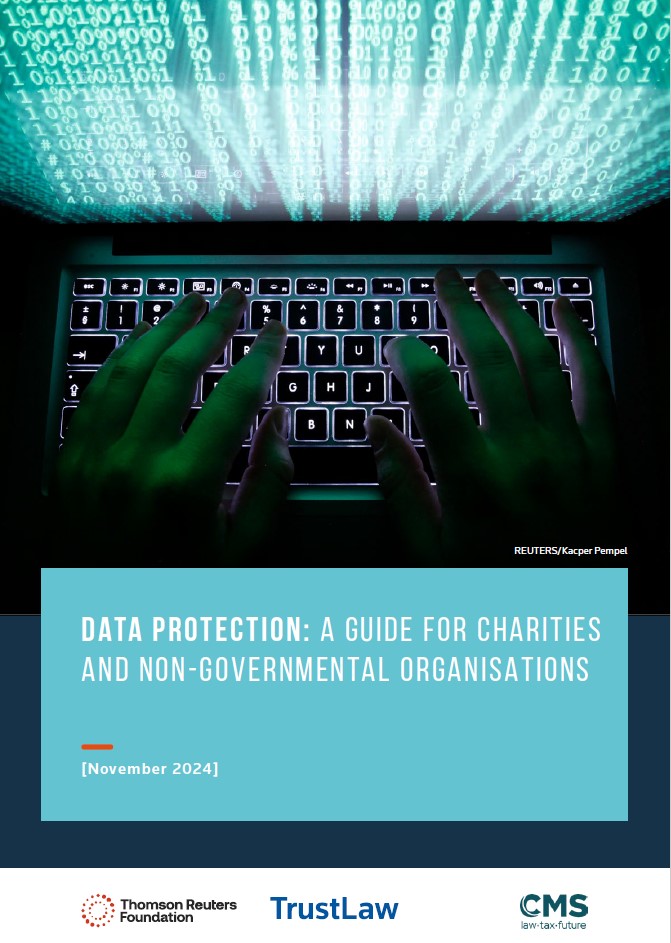
As dealing with personal data has become increasingly central to how modern organisations operate, knowing how to properly protect that data is crucial to meeting the expectations of legislation, regulators, and the public.

This guide provides charities and NGOs with an introduction to the data protection rules that govern the way they collect and use personal data. This guide aims to help charities and NGOs meet their obligations under data protection legislation in the UK.

This resource was developed by TrustLaw, the Thomson Reuters Foundation’s global pro bono network, with pro bono legal research by CMS Cameron McKenna Nabarro Olswang LLP.

Download PDF

Download pdf: Download PDF