The law is increasingly being weaponised around the world to silence public interest reporting. While some cases brought against journalists are legitimate, many are not.

Some cases known as Strategic Lawsuit Against Public Participation suits (SLAPPs) are deliberately brought to silence or intimidate journalists. The fear of retaliation or costly lawsuits may discourage publication or cause a journalist to remove a story.

This has the effect of chilling speech and may undermine public discourse, often on matters of public interest.

This global pre-publication review (PPR) guide has been published in response to this context. It aims to assist journalists to minimise their legal liability by providing a checklist of factors to consider before publishing a story. While this may not prevent SLAPPs or other legal attacks on journalists, this guide seeks to assist journalists in:

  • acting ethically
  • limiting their legal liability
  • ensuring that they may raise a reasonable defence before a court to avoid unfair legal sanctions.
Download report
Download
Details

Languages

EnglishSpanish

In the Philippines, despite being considered one of the most LGBTQIA+ friendly countries in the region, the absence of comprehensive national anti-discrimination laws and legal recognition for same-sex marriage is leaving many vulnerable.

This has been sorely felt by civil society organisations advocating in this space, many of whom are experiencing increasing levels of reprisal through tactics like ‘red-tagging’, which subject them to harassment, surveillance and prosecution under the country’s Anti-Terror and Human Security Acts.

The Thomson Reuters Foundation works to strengthen the resilience of civil society by raising awareness of emerging legal threats like these. This Guidebook is designed to be a practical tool, offering a summary of existing laws and protections, actionable steps for responding to discrimination, arbitrary arrest, or red-tagging, and best practices for safe advocacy.

Through TrustLaw, the Foundation’s global pro bono legal network, we connected Filipino NGO Mujer LGBT+ Organization with legal experts at SyCip Salazar Hernandez & Gatmaitan to develop the resource.

We hope that it will empower the LGBTQIA+ community in the Philippines to better understand their rights, protect themselves and to confidently seek justice.

Download PDF

Download pdf: Download PDF
Details

Countries

Philippines

Languages

English

Pro bono is more than just altruism — it’s good for business.

Over the course of the ten years since the Index was first launched in 2014, we’ve noticed that the percentage of firms that are using pro bono as a key tool for staff retention has risen by 104% and those who are using it for training and skills development in their teams has risen by 62%.

And the evidence is also clear, the firms who choose to structure and incentivise their pro bono work like other business functions log the most hours.

Download our ready-made presentation deck for your business meetings, showcasing the key decisions your firm can make to help boost pro bono engagement.

Download presentation

Download pdf: Download presentation

El trabajo pro bono es más que solo altruismo: es bueno para los negocios.

A lo largo de los diez años, desde que se lanzó el Index por primera vez en 2014, hemos observado que el porcentaje de firmas que utilizan el pro bono como una herramienta clave para la retención de personal ha aumentado un 104%, y aquellas que lo emplean para la formación y el desarrollo de habilidades en sus equipos ha aumentado un 62%.

La evidencia también es clara: las firmas que eligen estructurar e incentivar su trabajo pro bono como otras funciones empresariales registran la mayor cantidad de horas.

Nuestra presentación lista para usar en sus reuniones de negocios muestra las decisiones clave que su firma puede tomar para ayudar a aumentar el compromiso con el pro bono.

Descargar diapositivas de PowerPoint

Download pdf: Descargar diapositivas de PowerPoint

As part of our work to improve access to high-quality training and employment pathways for journalists in Eastern Europe, the Thomson Reuters Foundation is collaborating with journalism schools and newsrooms in Moldova. Our work focuses on smoothing the transition for young journalists from education to professional newsrooms, while equipping them with the professional skills to grow their careers. We aim to develop the journalism curriculum of journalism schools in the region and bolster pathways into employment for aspiring journalists. Through these efforts, we aim to strengthen independent reporting throughout the region.

We have developed a comprehensive guide to employment rights for entry level journalists and freelancers in Moldova. This resource was created in response to operational legal questions raised by interns and partners during our work in the country. It covers topics such as transition from internships to paid employment, key standard contract terms, benefits and entitlements in the workplace, intellectual property rights, and fair compensation practices.

By providing clear explanations of complex legal concepts in accessible language, we aim to empower young media professionals to advocate for themselves effectively when entering the industry. This knowledge helps create more equitable working relationships and contributes to a more sustainable media ecosystem.

Download report
Download

This three-part toolkit aims to empower journalists and civil society organisations to inform public discourse, drive policy and regulatory change and advocate for ethical and responsible AI deployment.


As AI systems become increasingly embedded in everyday life, they raise important questions about regulation, ethics, and their potential impact on human rights. These questions find form in debates about the governance of AI – how do we provide protection without stifling innovation? How can the law keep pace with the evolving nature of AI? Should AI be governed internationally or domestically?

The AI Governance for Africa toolkit aims to help civic actors unpack these questions, by outlining the state of AI governance in Africa and globally, and exploring advocacy approaches for future governance.

The AI for Governance toolkit series was written by S’lindile Khumalo and Murray Hunter from ALT Advisory, with contributions from Nompilo Simanje and Mweshi Banda, and 2023 contributions from Tara Davis and Tharin Pillay. It was developed through our partnership with the Patrick J. McGovern Foundation.


Explore the toolkit series

Read more
A man in a rustic airtime kiosk looks down at his phone, wearing large headphones. Greyscale, high contrast. Image by Aidah Namukose / ALT Advisory (CC BY-NC-ND)
Silhouettes of demonstrators are seen as they march around the Hungarian parliament to protest against Hungarian Prime Minister Viktor Orban and the latest anti-LGBTQ law in Budapest, Hungary, June 14, 2021. REUTERS/Marton Monus TPX IMAGES OF THE DAY
Read more
A woman with her hair in a headwrap, wearing earbuds, looks at a phone screen. Greyscale, high contrast. Image by Aida Namukose / ALT Advisory (CC BY NC ND)
Silhouettes of demonstrators are seen as they march around the Hungarian parliament to protest against Hungarian Prime Minister Viktor Orban and the latest anti-LGBTQ law in Budapest, Hungary, June 14, 2021. REUTERS/Marton Monus TPX IMAGES OF THE DAY
Read more
A woman with her hair in a headwrap, wearing earbuds, looks at a phone screen. Greyscale, high contrast. Image by Aida Namukose / ALT Advisory (CC BY NC ND)
Silhouettes of demonstrators are seen as they march around the Hungarian parliament to protest against Hungarian Prime Minister Viktor Orban and the latest anti-LGBTQ law in Budapest, Hungary, June 14, 2021. REUTERS/Marton Monus TPX IMAGES OF THE DAY

About the programme

The 2024 AI Governance for Africa toolkit forms part of Thomson Reuters Foundation’s AI Ethics, Data and Digital Rights Accelerator. Through our partnership with the Patrick J. McGovern Foundation, this programme upskills journalists and civil society organisations to understand the benefits and risks of AI.

Read more

This practical starter guide is designed to help newsrooms identify ethical risks in their AI applications and take action to mitigate these.


Overview

Our research with journalists in the Global South and emerging economies shows that while 81% of journalists are already using AI in their work, only 13% have established AI policies.

Protecting journalism in the AI age means adopting it responsibly. This guide is intended as a starting point for ongoing conversations within your organisation on how to use AI while upholding journalistic values—accuracy, fairness, transparency, and accountability. These principles serve as essential pillars for informed communities worldwide, allowing journalism to fulfil its vital role in society.

Download the guide

Download pdf: Download the guide

Why it matters

How is AI transforming journalism?

We are witnessing a major transformation in how news is created, distributed, and consumed. The adoption of AI in journalism offers both opportunities and risks for newsrooms worldwide.

AI tools can improve the production and distribution of news, speed up fact-checking, and help resource-limited newsrooms do more. Yet AI tools pose many risks.

What are the risks of getting AI wrong?

When newsrooms use generative AI without proper human oversight, they risk publishing errors that directly damage their reputation and reader trust—potentially driving away subscribers and making advertisers, funders, or sponsors think twice.

Similarly, AI recommendation systems that chase clicks and engagement can end up burying newsrooms’ best work. Those investigative stories your team spent months researching—about corruption or human rights abuses—might get pushed aside for lighter or viral content, essentially wasting your newsroom’s limited resources and diluting what makes your journalism stand out.

For news organisations already struggling financially, these AI missteps can directly hit your revenue, weaken your competitive edge, and even create legal headaches.

What are the benefits of getting AI right?

Getting AI right not only upholds journalistic standards and ethics, but also can protect your newsroom’s financial health, reputation, and future in an increasingly challenging media environment.

By developing responsible AI practices now, your newsroom will be better positioned to adapt to future technological developments while maintaining trust with your audience.


How to use this guide

Each step in this guide builds on the previous one, helping you move from understanding your current AI usage to implementing responsible practices.

  • Step 1: Identify your AI tools
  • Step 2: Map the risks and solutions
  • Step 3: Integrate AI guidelines into your editorial policies

We recommend involving journalists, editors, and technical staff in this process to ensure capturing diverse perspectives.

Download the guide

Download pdf: Download the guide

The TrustLaw Index of Pro Bono identifies global trends in the pro bono marketplace, highlights success factors in pro bono practices and looks at the amount of pro bono work law firms are undertaking on a country-by-country basis.

Since the launch of the TrustLaw Index of Pro Bono in 2014, it has rapidly become a central repository of information on the global pro bono sector, uncovering emerging trends and quantifying the complex ways in which the sector is evolving. The information provided as part of the TrustLaw Index is an invaluable tool to help spread the practice of pro bono around the world.

See the 2024 Index findings for additional information on how the data is presented.

Download PDF

Download pdf: Download PDF

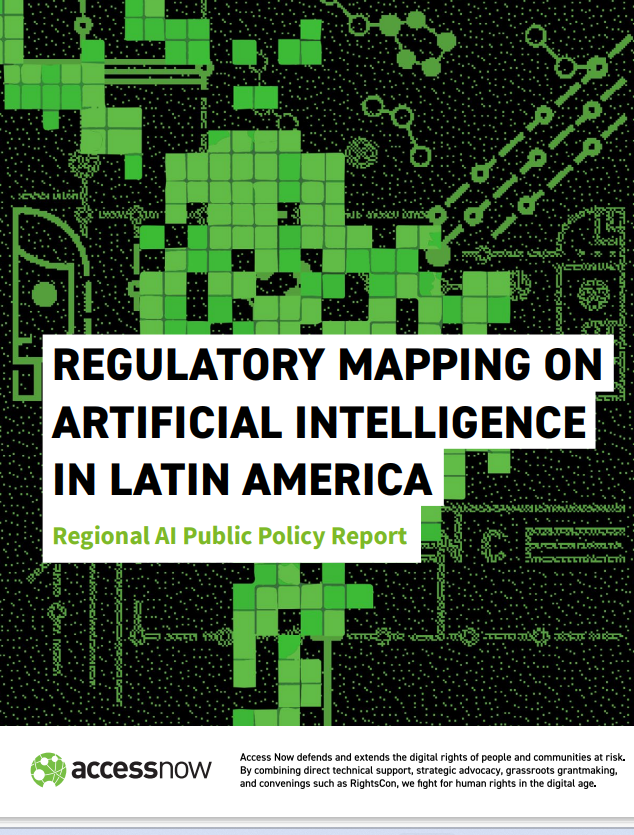
Emerging technologies have a major impact in many areas, including the exercise of certain human rights such as freedom of expression and access to information. In a world driven by innovation and immediacy, transparency in the public sector plays a key role in securing public trust and promoting the responsible use of these technologies.

This report assesses the current legal framework on transparency in the procurement, implementation, and development of these emerging technologies in the Latin American region. It highlights the importance of algorithmic transparency as a key component of accountability and trust in government. This legal report provides a detailed comparative analysis and a series of recommendations to improve transparency in the management of emerging technologies in Latin America and advocate on public policies.

Through TrustLaw, we connected Article 19, Office for Mexico and Central America, with legal experts at ECIJA Legal in Argentina; Hogan Lovells in Mexico; Mattos Filho, Veiga Filho, Marrey Jr. e Quiroga Advogados in Brazil; Cariola Diez Pérez-Cotapos & Cía. Ltda. in Chile; and a pro bono law firm in Colombia, to develop this report. We also had the participation of IIJ-UNAM Law and Artificial Intelligence Research Line.

Download report
Download

Report

How journalists in the Global South and emerging economies are using AI, and the challenges they face


Overview

From enhanced efficiency to personalised reporting, the AI revolution in journalism is reshaping how we produce, distribute and consume news. 

This transformation promises creativity and innovation in newsrooms. However, it also presents significant challenges in areas such as ethics and equity. Existing narratives about AI adoption are often Western-centric, yet access to this technology differs worldwide, as do the problems faced by journalists and newsrooms.

To address this imbalance, in October 2024, we surveyed more than 200 journalists – all alumni of our training programmes – from 70+ countries across the Global South and emerging economies to explore their adoption of AI, as well as their hopes and fears about journalism in the AI era.

Using these findings, our new report shines a much-needed spotlight on the journalistic landscape in the Global South and emerging economies, and provides a platform for the voices of journalists navigating rapid technological change. This report forms the first in our TRF Insights series, where we work with our global alumni network of journalists to take timely pulse checks of major developments in the profession and provide data-led insights for the sector.

Access the report

Report snapshot

0 %

of newsrooms surveyed had no established policy for AI.

While over 80% of the journalists we surveyed were using AI in their profession, almost 8 in 10 had no established policy for AI use in their newsrooms.

0 %

said that AI had significantly impacted their work.

Despite concerns about AI’s impact on creativity, originality, and the risk of increased misinformation, journalists expressed a cautious optimism towards this new technology, recognising its capability to support on a diverse range of tasks.

0 %

of AI users are self-taught, indicating a greater need for training.

In the absence of clear policies or structured training opportunities, many journalists are taking the initiative to educate themselves about AI.

Key recommendations

Our report features recommendations based on the insights from the journalists we surveyed, as well as our owWhile these challenges are not unique to Kenya, solutions require collaborative action across the country's media freedom ecosystem. Recommendations include the need to:

  • Strengthen implementation of access to information and community media laws
  • Confront abuse of court processes through legal protections and judicial reform
  • Mitigate the impact of repressive and disabling legislation
  • Address technology-facilitated harms
  • Advance the sustainability of journalism

Three steps to an AI-ready newsroom: A practical guide

Designed in response to this research, this starter guide aims to support newsrooms identify ethical risks in their AI applications and take action to mitigate these.
Read more
 

About the author

Damian Radcliffe