


As emphasized by UN Women, sport has the power to change lives. “By teaching women and girls teamwork, self-reliance, resilience and confidence, sport is one of the great drivers of gender equality. Women in sport defy gender stereotypes and social norms, make inspiring role models, and show men and women as equals”.
This report compares the laws and regulations concerning the legal recognition of female professional athletes in Spain, Argentina, Brazil, Colombia, France, Germany, Italy, Mexico, Peru and the United Kingdom. It analyses whether labor laws are applied to women athletes and assesses current policy and political attitudes with respect to women athletes in the relevant countries. The report also discusses some of the remedies provided in certain parts of the world to address gender discrimination, including traditional civil remedies, other less traditional remedies, gender quotas, and creating task forces.
We hope this report becomes a tool to support women in sport globally and helps to reshape laws and policies in many countries.
– – – – – – – – – – – – – – – – – – – – – – – – – – – – – – – – – – – – – – – – – – – – –
Como destaca ONU Mujeres, el deporte tiene el poder de cambiar vidas. “Al enseñar a mujeres y niñas el trabajo en equipo, la autosuficiencia, la resiliencia y la confianza, el deporte es uno de los grandes promotores de la igualdad de género. Las mujeres en el deporte desafían los estereotipos de género y las normas sociales, son modelos a seguir y muestran a hombres y mujeres como iguales”.
Este estudio compara las leyes y regulaciones relativas al reconocimiento legal de las deportistas profesionales en España, Argentina, Brasil, Colombia, Francia, Alemania, Italia, México, Perú y Reino Unido. Asimismo, analiza si las leyes laborales se aplican a las mujeres deportistas y evalúa la política actual y las actitudes políticas respecto a las mujeres deportistas en los países antes mencionados. El estudio también analiza algunos de los recursos proporcionados en ciertas partes del mundo para abordar la discriminación de género, incluidos los recursos civiles tradicionales, otros recursos menos tradicionales, cuotas de género y la creación de grupos de trabajo.
Esperamos que este estudio se convierta en una herramienta para apoyar a las mujeres en el deporte a nivel mundial y ayude a reformar leyes y políticas en muchos países
Share


Sign up to our newsletter
Details
Countries
ArgentinaBrazilColombiaFranceGermanyItalyMexicoPeruSpainUnited KingdomLanguages
EnglishSpanishDownload Report

Related resources
View all
Legal guidelines on the use of AI in newsrooms (Kenya and Tanzania)
These legal guidelines aim to…
Read More
Casebook for newsroom AI prototypes and governance
This casebook documents what six small and mid-size newsrooms…
Read More
Before you publish: Middle East and North Africa legal pre-publication review guide for journalists
This Guide aims to assist journalists in the Middle East and North Africa in…
Read More
Know your rights guide for journalists covering protests in the U.S.
A guide for journalists in the…
Read More
AI use and best practice policy for newsrooms – Argentina
A practical guide which provides…
Read More
AI use and best practice policy for newsrooms – Uruguay
A practical guide which provides newsrooms…
Read More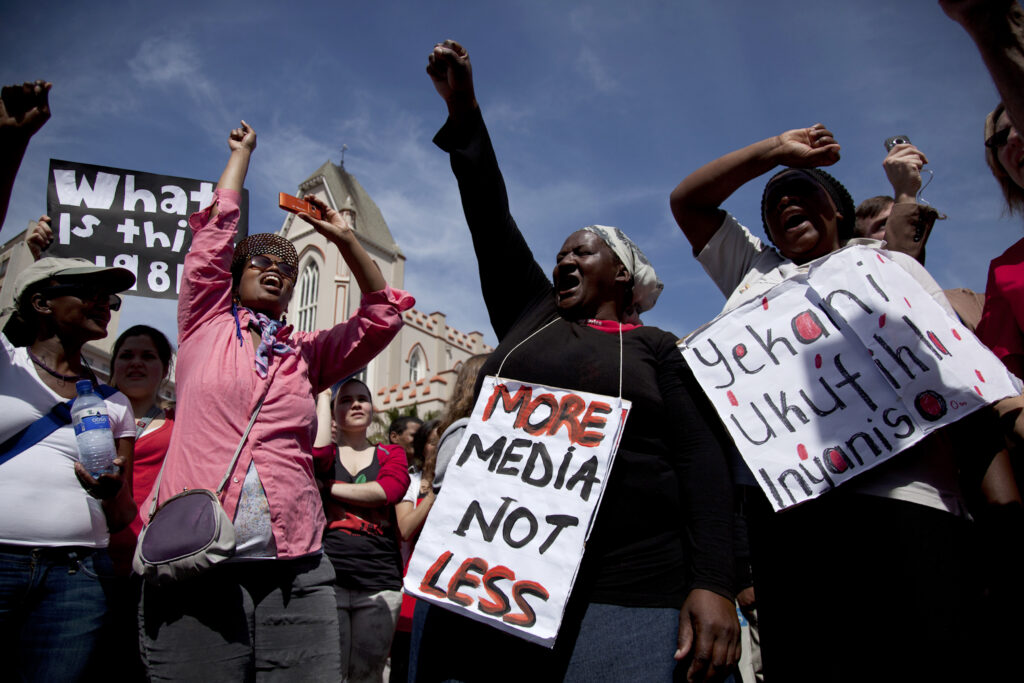
Weaponising the law: Threats to media freedom in South Africa
The legal threats eroding South Africa’s…
Read More
The global impact of the EU AI Act
This report is essential reading for business leaders navigating AI governance…
Read More
A New Generation of Laws Is Restricting Civic Space in Latin America
Civil society is under…
Read More
A Practical Guide to Copyright Claims
This resource will allow CSOs and newsrooms to understand and comply with U.S….
Read More

