TRF

When applied legitimately, defamation laws are intended to protect individuals and businesses against false statements that are harmful to their reputation. Yet both civil and criminal defamation laws have the potential to be misused to prevent open public debate.

This guide provides journalists with a practical understanding of defamation laws and the steps they can take to mitigate defamation liability in South Africa. This awareness will empower journalists to understand their legal rights and obligations and continue to report on issues of vital public interest.

The guide covers the scope of defamation law, the criminal and civil process of cases in courts, the defences against defamation, sanctions against defamation, and practical steps to mitigate defamation liability.

This was produced by the Thomson Reuters Foundation, with pro bono legal research provided by Bowmans South Africa.

Details

Countries

South Africa

Languages

English

Download guide

Download pdf: Download guide

TRF

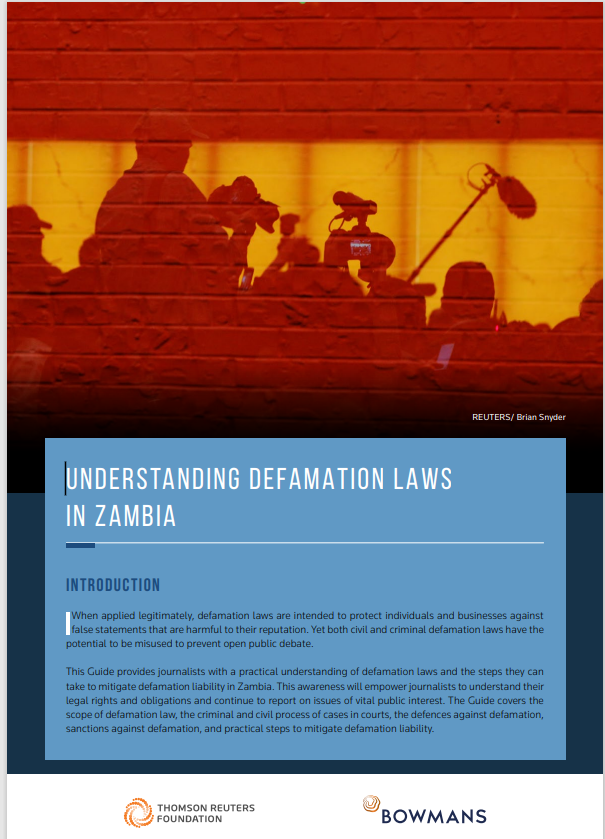
When applied legitimately, defamation laws are intended to protect individuals and businesses against false statements that are harmful to their reputation. Yet both civil and criminal defamation laws have the potential to be misused to prevent open public debate.

This Guide provides journalists with a practical understanding of defamation laws and the steps they can take to mitigate defamation liability in Zambia. This awareness will empower journalists to understand their legal rights and obligations and continue to report on issues of vital public interest. The Guide covers the scope of defamation law, the criminal and civil process of cases in courts, the defences against defamation, sanctions against defamation, and practical steps to mitigate defamation liability. This was produced by the Thomson Reuters Foundation, with pro bono legal research provided by Bowmans Zambia.

Details

Countries

Zambia

Languages

English

Download Guide

Download pdf: Download Guide

Tags

TRF

This resource is from 2023. View our updated 2024 guidance.

As AI systems become increasingly embedded in everyday life, they raise important questions about regulation, ethics, and their potential impact on human rights. These questions find form in debates about the governance of AI – how do we provide protection without stifling innovation? How can the law keep pace with the evolving nature of AI? Should AI be governed internationally or domestically?

Despite the complexity of AI governance, it is clearly a global concern. Countries are at different phases of resolving these questions and have implemented a range of governance instruments in response to concerns.

This toolkit unpacks the context of AI governance, in Africa and globally, and considers advocacy approaches for future governance. It does so in the following ways:

Part 1 examines existing AI governance instruments in Africa with a particular focus on the East African Community. This chapter outlines continental responses and details existing governing measures in Africa.

Part 2 unpacks existing international governance measures. In doing so it considers governance trends and important considerations included in governance instruments.

Part 3, which is a separate document, explores a series of key questions for the design of advocacy strategies on AI governance, particularly in African contexts.

The aim of the toolkit is to empower journalists and civil society organisations to inform public discourse, drive policy and regulatory change and advocate for ethical and responsible AI deployment.

Details

Countries

Global

Languages

English

Download Guide

Download pdf: Download Guide

TRF

This resource is from 2023. View our updated 2024 guidance.

As AI systems become increasingly embedded in everyday life, they raise important questions about regulation, ethics, and their potential impact on human rights. These questions find form in debates about the governance of AI – how do we provide protection without stifling innovation? How can the law keep pace with the evolving nature of AI? Should AI be governed internationally or domestically?

Despite the complexity of AI governance, it is clearly a global concern. Countries are at different phases of resolving these questions and have implemented a range of governance instruments in response to concerns.

This toolkit unpacks the context of AI governance, in Africa and globally, and considers advocacy approaches for future governance. It does so in the following ways:

Part 1 examines existing AI governance instruments in Africa with a particular focus on the East African Community. This chapter outlines continental responses and details existing governing measures in Africa.

Part 2 unpacks existing international governance measures. In doing so it considers governance trends and important considerations included in governance instruments.

Part 3, which is a separate document, explores a series of key questions for the design of advocacy strategies on AI governance, particularly in African contexts.

The aim of the toolkit is to empower journalists and civil society organisations to inform public discourse, drive policy and regulatory change and advocate for ethical and responsible AI deployment.

Details

Countries

Global

Languages

English

Download Guide

Download pdf: Download Guide

TRF

This guide provides journalists with a practical understanding of the legal framework on news sources in South Africa. It assesses the recognition of news sources in law, the protection of new sources, as well as search and seizure relating to journalists’ gadgets and information.

This information will help journalists and media organisations understand their legal rights and obligations and continue to report on issues of vital public interest.

This was produced by the Thomson Reuters Foundation, with pro bono legal research provided by Bowmans South Africa.

Details

Countries

South Africa

Download guide

Download pdf: Download guide

TRF

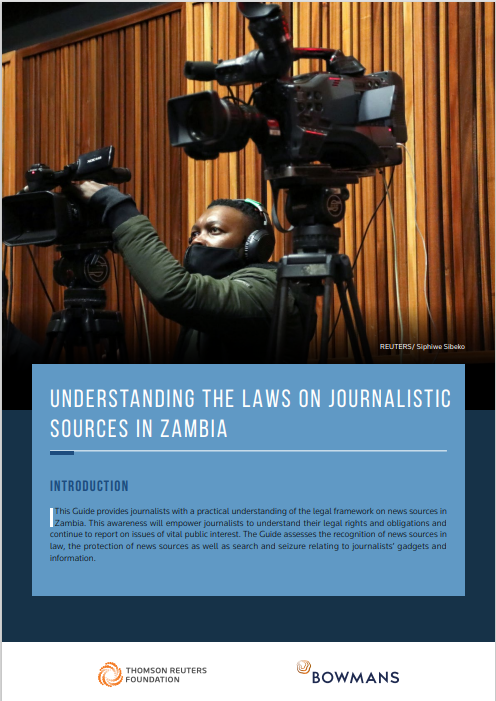
This Guide provides journalists with a practical understanding of the legal framework on news sources in Zambia. It assesses the recognition of news sources in law, the protection of new sources, as well as search and seizure relating to journalists’ gadgets and information. This information will help journalists and media organisations understand their legal rights and obligations and continue to report on issues of vital public interest. This was produced by the Thomson Reuters Foundation, with pro bono legal research provided by Bowmans Zambia.

Details

Countries

Zambia

Languages

English

Download Guide

Download pdf: Download Guide

TRF

This guide provides journalists with a practical understanding of the legal framework on news sources in Kenya. It assesses the recognition of news sources in law, the protection of new sources, as well as search and seizure relating to journalists’ gadgets and information.

This information will help journalists and media organisations understand their legal rights and obligations and continue to report on issues of vital public interest.

This was produced by the Thomson Reuters Foundation, with pro bono legal research provided by Bowmans Kenya.

Details

Countries

Kenya

Download guide

Download pdf: Download guide

TRF

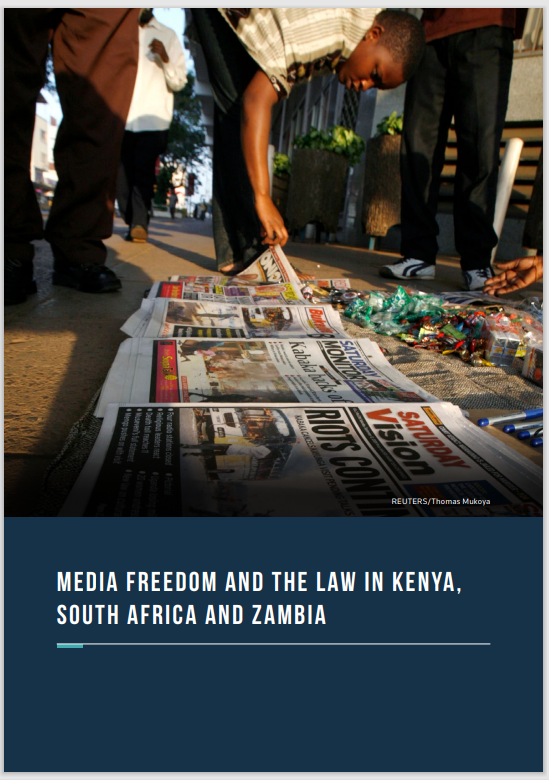
This research highlights the key media laws that impact the media and the work of journalists and media organisations in Kenya, South Africa and Zambia. The overview of the legal and regulatory frameworks offers a focus on key issues of constitutional protections for freedom of the media and freedom of expression, broadcast and other licensing regimes, ownership requirements (including media and competition law requirements), defamation laws, and related case law summaries.

Details

Countries

KenyaSouth AfricaZambia

Languages

English

Download Report

Download pdf: Download Report

ELD

Este informe reúne los principales hallazgos de una investigación que se propuso analizar el marco regulatorio existente sobre la violencia y el acoso contra las mujeres en el ámbito del trabajo en 11 países de América Latina: Argentina, Brasil, Bolivia, Chile, Colombia, Ecuador, México, Paraguay, Perú, Uruguay y Venezuela.

This report gathers the main findings of a piece of research the objective of which was to analyse the existing regulatory framework on violence and harassment against women in the world of work in 11 Latin American countries: Argentina, Brazil, Bolivia, Chile, Colombia, Ecuador, Mexico, Paraguay, Peru, Uruguay and Venezuela.

Details

Countries

ArgentinaBoliviaBrazilChileColombiaEcuadorMexicoParaguayPeruUruguayVenezuela

Languages

Spanish

Download Report

Download pdf: Download Report

RLP

This report explores the legal financing mechanisms currently in existence in five countries in the region: Chile, Costa Rica, Mexico, Peru and Uruguay and limits its analysis to measures that explicitly target care.

Este documento explora los mecanismos legales de financiamiento vigentes en cinco países de la región: Chile, Costa Rica, México, Perú y Uruguay, considerando el análisis a las intervenciones dirigidas de manera explícita al cuidado.

Details

Countries

ChileCosta RicaMexicoPeruUruguay

Languages

EnglishSpanish

Download Report

Download pdf: Download Report