


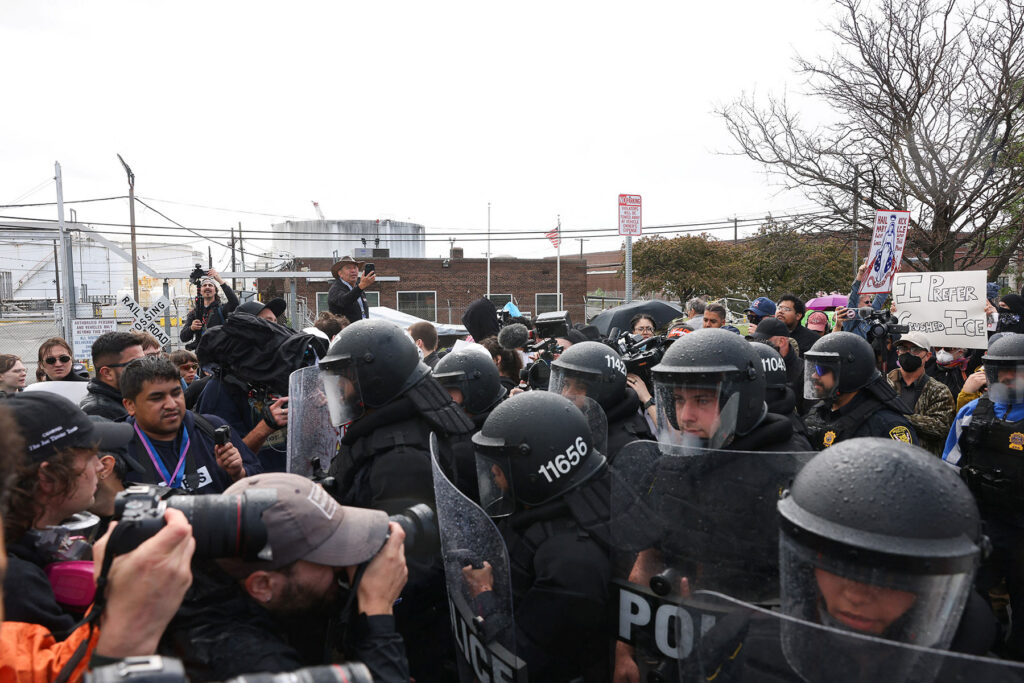
Journalists in the United States are operating in an increasingly challenging environment. Those covering protests face a complex and evolving legal landscape, including uncertainty around their rights when interacting with law enforcement. Confusion about state and federal legislation, concerns about protecting both property and information, and uncertainty about available legal recourse all create both legal and physical risk.
To help journalists navigate these challenges, TrustLaw, our global pro bono legal network, facilitated legal research for the Committee to Protect Journalists (CPJ) to produce an updated ‘Know your rights guide for journalists covering protests in the US’ - a free resource that provides:
- An overview of constitutional protections that apply to journalists
- Deep dives into state law across key jurisdictions
- Recommendations for minimising risk and available legal recourse if a journalist believes their rights have been violated.
Although not a substitute for legal counsel, this tool can help to significantly reduce and manage risk when covering protests in the US.
TrustLaw connected the CPJ with a team of legal experts drawn from our global pro bono network in the production of this guide and can also help you connect with pro bono legal counsel if needed.
You can learn more about our free legal service for civil society organisations, social enterprises and non-profit independent media, and sign up for TrustLaw membership.
This guide was first published in July 2024 and updated in July 2026.


Related resources
View all
Digital Services Act and European Media Freedom Act: What they mean for content moderation and media freedom
In the internet age, online news sources command a much larger readership than printed media….
Read More
Legal guidelines on the use of AI in newsrooms (Kenya and Tanzania)
These legal guidelines aim to…
Read More
Casebook for newsroom AI prototypes and governance
This casebook documents what six small and mid-size newsrooms…
Read More
Before you publish: Middle East and North Africa legal pre-publication review guide for journalists
This Guide aims to assist journalists in the Middle East and North Africa in…
Read More
AI use and best practice policy for newsrooms – Argentina
A practical guide which provides…
Read More
AI use and best practice policy for newsrooms – Uruguay
A practical guide which provides newsrooms…
Read More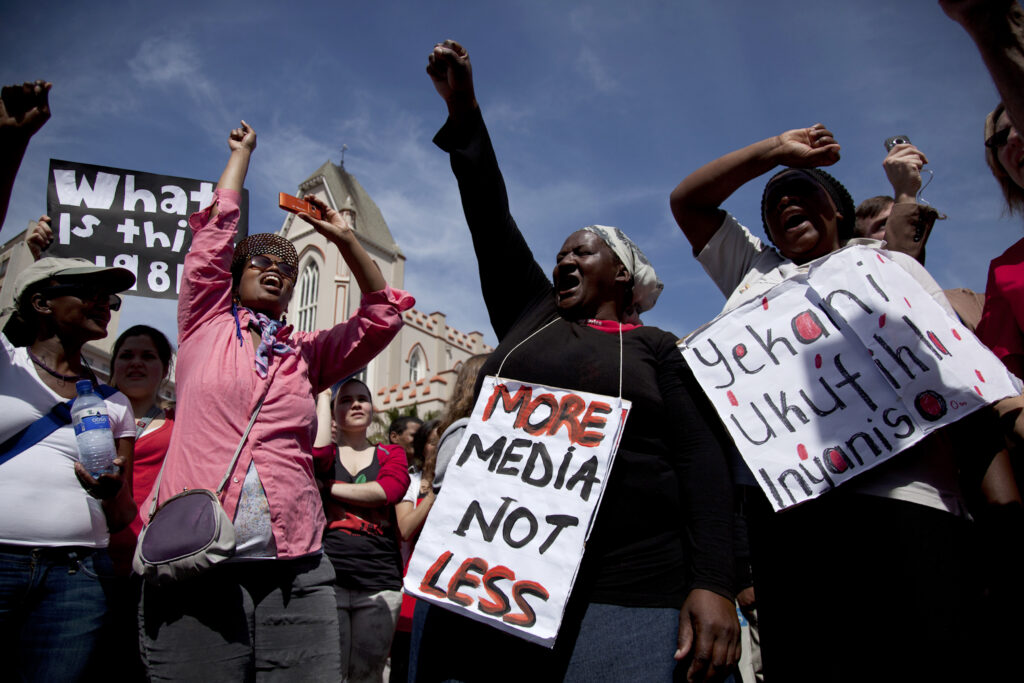
Weaponising the law: Threats to media freedom in South Africa
The legal threats eroding South Africa’s…
Read More
The global impact of the EU AI Act
This report is essential reading for business leaders navigating AI governance…
Read More
A New Generation of Laws Is Restricting Civic Space in Latin America
Civil society is under…
Read More
A Practical Guide to Copyright Claims
This resource will allow CSOs and newsrooms to understand and comply with U.S….
Read More

