


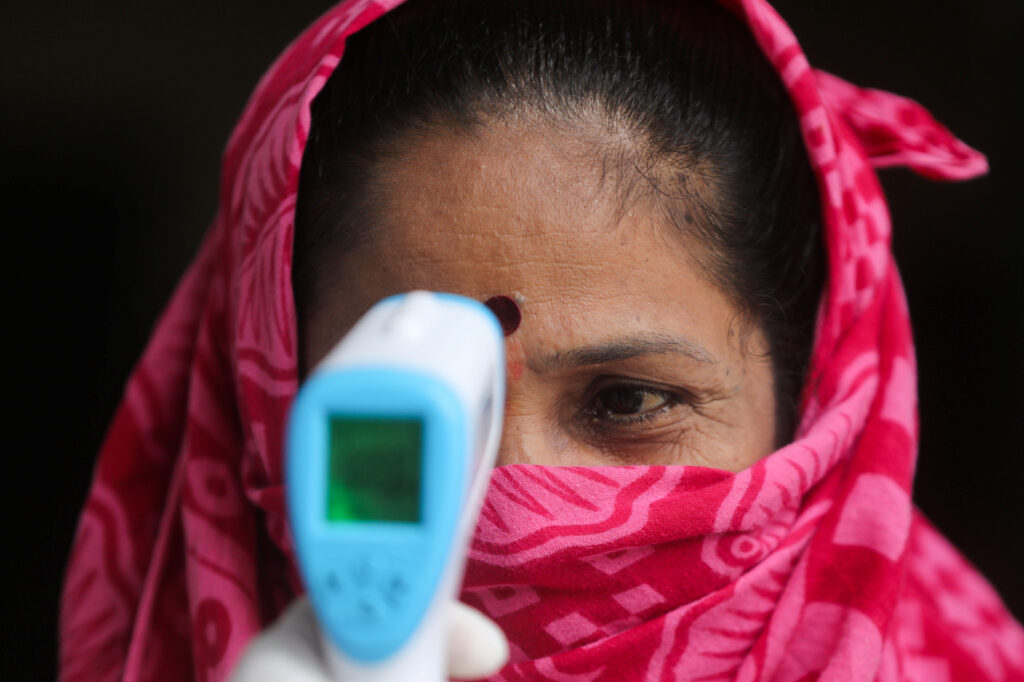
Thirteen journalists from across the Asia-Pacific region took part in the Thomson Reuters Foundation’s Health Reporting training from September 28 to October 9.
The workshop, sponsored by Novartis, focused on equipping journalists with the skillset and knowledge needed to accurately report on topical public health issues – from advanced breast cancer and lung cancer to COVID-19. With stigma and fear surrounding these health conditions, the course also delved into the ethics of covering sensitive topics and interviewing vulnerable people.
This is the second such course to be held virtually this year, with a cohort of reporters based in the Middle East and North Africa region completing their training in June.
As the workshop drew to a close, one participant reflected on her experience:
By Hannah Alcoseba Fernandez, journalist at Eco-Business, Philippines
When the first wave of COVID-19 swept through the world earlier this year, I didn’t report on it. After all, I worked for a media organisation that focused on sustainable development news in Asia, as opposed to health.
Fast forward to ten months later, it is nearly impossible to write about sustainable development without referencing the impact of the current health crisis. From the unprecedented amount of medical waste churned out by coronavirus-related treatments to migrant workers cramped in crowded quarters as containment measures were put in place in Asia, the pandemic has certainly cut across most facets of sustainability.
It is for this reason that I grabbed the opportunity to participate in the Thomson Reuters Foundation and Novartis Health Reporting training for journalists in the Asia-Pacific region.
Held over two weeks, the training focused on enhancing our reporting on public health issues such as the coronavirus pandemic. We were mentored by seasoned journalists, including Sara El-Khalili – a former reporter for Reuters, the Associated Press and Cairo Times – and Alison Leung – former Deputy Chief of Thomson Reuters’ Hong Kong Bureau.
Using real life case studies, we sharpened our skills in evaluating scientific reports and discerning credible information from fake news. We were also reminded about our responsibility as gatekeepers of information, especially with COVID-19 misinformation presenting such a serious risk to public health.
Take the case of the controversial French study, which put forward the idea that smoking could reduce the risk of coronavirus infection. The research was later debunked by experts, but not before leading media outlets ran headlines on the tentative findings. As a result, France had to restrict sales of nicotine in its pharmacies to prevent panic buying of the deadly stimulant.
Our lead trainer, El-Khalili, summed it up succinctly: “There is a sanctity associated with the word we put out, even if we put out a disclaimer. Our job is to filter, for misinformation not to reach the public. My job is not to put out a disclaimer”.
It was not just the world-class trainers who provided insight during the course; the wealth of knowledge shared by my fellow participants – a mix of emerging and veteran journalists from the Philippines, India, Sri Lanka and Hong Kong – was invaluable and certainly enhanced my learning.
One of the highlights of the course was the opportunity to connect with the other participants outside of class and work on our daily assignments together, which included tasks such as identifying flaws in scientific research and preparing presentations of our findings. It was during these informal discussions that I learnt about the stigmatisation of illnesses in different cultures – for instance, the association between cancer and bad character in certain rural villages in India.
Overall, the course has prompted me to refocus my reporting and explore the overlap between healthcare and sustainability issues, as well as corruption and inequality in the health sector – particularly during the COVID-19 era.
I am currently working on a story about the power imbalance between wealthier countries with the necessary resources to develop a coronavirus vaccine and developing countries in Asia. In my piece, I hope to put a spotlight on the Philippines as an example of a country that is reliant on richer nations not only for a vaccine but its fair and equitable distribution.
I look forward to applying the journalistic best-practices I learnt from the training to my article. This includes going through a rigid fact-checking process, reaching out to credible and expert sources, and using visuals to clearly tell my story.
The course has also inspired me to work on a collaborative project with my fellow trainees, which will examine the impact of coronavirus lockdowns on migrant workers in the Philippines, Sri Lanka and India. I hope that we will be able to uncover more under-reported stories at the heart of public health, human rights and sustainability, as this training has stirred us to do.
Share


Sign up to our newsletter
More News
View All
World News Day: every $1 invested in journalism can return $100 to society. So why are we letting it collapse?
Defending journalism is not just a moral responsibility. It’s an economic and democratic…
Read More
AI legislation is important in upholding universal human rights
Our Director of Responsible Business,…
Read More
How civil society can counter the rise of legal restrictions across Latin America
New…
Read More
Legal support: a lifeline for civil society and democracy
How democracies become stronger when civil society…
Read More
How upholding workers’ rights builds democratic resilience
How businesses treat their workers…
Read More
Protecting independent media is protecting democracy
How protecting independent media protects democracy itself.
Read More
What legal risks do content creators face? 5 key considerations for influencers
Content…
Read More
What the EU’s Procurement shift could mean for workforce disclosure
In the wake of the…
Read More
Why existing support for civil society can’t solve this crisis
Most support wasn’t designed…
Read More
What happens when content creators and journalists come together?
Our Multimedia Editor for Openly,…
Read More

