



To make informed decisions about their lives, people need access to accurate, credible information about the issues that impact them and their communities. Independent journalism plays a critical role in protecting this trusted information environment. It challenges false narratives, holds power to account, and ensures that people’s voices are heard.
This is vital for marginalised groups who, in many countries, don’t have access to life-saving health services. Since 2020, the Thomson Reuters Foundation has been working in partnership with the Global Fund to amplify their voices.
Our programme helps young civil society leaders and journalists across Africa and Asia tackle human rights-related barriers to healthcare. The training included support to combat mis- and disinformation and change the harmful public narrative around marginalised groups that prevent them from accessing this care. Participants also received training to improve their legal awareness when reporting on these sensitive issues and to hold power to account.
We talked to two Nigeria-based journalists, Gloria Attah and Hammad Abdulrasheed, to discuss how this training improved their approach to accurately reporting on health-related issues.
The challenges of Nigeria’s media sector
Journalism is a highly dynamic industry. However, its activities are often shaped by many political and economic factors, and as a result, journalists often encounter a range of challenges when reporting on sensitive issues. For example:
- Journalists work in media houses that operate with constrained budgets, affecting the scale and depth of stories they’re able to pursue
- Journalists can be pressured into self-censorship out of fear of reprisal, arrest or the threat of legal retribution from powerful actors
- Journalists may be denied access to key information by public institutions, forcing them to rely on alternative and sometimes more dangerous methods of verification.
This is set against a backdrop where the rising challenge of mis- and disinformation, and a decline in public trust means audiences increasingly view traditional media with scepticism. The challenge is further compounded by difficulties in gaining the trust of vulnerable communities and the risk of reinforcing social stigma around populations living with HIV, TB, and malaria.
Journalism training that combines skills building with legal support helps journalists continue to provide reliable, public-interest journalism to their audiences – contributing to a trusted information environment.
Equipping journalists with the skills to counter mis- and disinformation
Attah and Abdulrasheed are amongst the 47 journalists who completed training on reporting on human rights-related barriers to health services across West Africa and Asia. The training included practical sessions on:
- Storytelling
- Fact-checking
- Pitching
- Data use
- Source protection
- Ethical reporting.
They also worked with experienced journalists and received a story grant to publish their article. These grants enabled journalists to cover logistics such as access to research materials and travel costs.
The training strengthened their ability to identify and counter false, stigma-driven narratives that can harm marginalised communities. It equipped them with the knowledge and tools to conduct responsible and ethical reporting.
For example, Abdulrasheed reported on malaria in flood-affected communities. Prior to publishing the story, he verified the health data and claims with multiple experts and local officials to ensure accuracy. Similarly, Attah withheld a viral claim after her fact-checking process revealed that it was AI-generated.

I now apply stronger data-driven reporting techniques, clearer ethical frameworks, and improved risk assessment. I also engage sources more effectively and collaborate better with stakeholders, allowing me to pursue more complex stories with greater accuracy, legal awareness, and editorial confidence.
I learned how to easily spot fake news and verify images, videos, and AI-generated videos and images. I now cross-check claims more rigorously, especially on social media, and avoid amplifying unverified stories.
In addition, TrustLaw, our global pro bono network, provided legal support that improved their legal awareness, enabling them to report more safely on these complex, high-risk stories. They can now more confidently identify potential legal threats, understand and ensure compliance with defamation and privacy laws, and make ethical decisions before publication.
As a journalist, one of my biggest fears when it comes to executing stories is how to get legal backing if I come to a crossroad with an institution or individual I write about. This support made me more confident in pursuing high-risk investigations while ensuring accuracy, fairness, and legal compliance.
Abdulrasheed also shared what he learned from the training with other journalists, encouraging his media outlet to cover and pursue more stories about barriers to life-saving health services.
Sharing knowledge is important because it equips more journalists and newsrooms with knowledge and expertise to cover barriers to health services and help produce accurate and credible information for audiences. It promotes consistent ethical standards, better verification practices, and more collaborative storytelling.
The importance of accurate information for communities
Ethical and accountability journalism strengthens public trust in democratic institutions. That’s why when journalists have the tools to deliver accurate and reliable news to their communities, they can better withstand the threats that false narratives pose to both local audiences and the wider information landscape.
In the communities I serve, verified information helps people make informed decisions, especially on sensitive issues like security, health, and governance rather than one driven by emotions and public opinions. It also holds authorities accountable and reduces panic or tension that can arise from false or misleading reports.
Share


Sign up to our newsletter
More News
View All
From competitors to collaborators: How AI training brought two South African newsrooms together
In partnership with Microsoft, we supported four newsrooms in South Africa with…
Read More
How one newsroom built an AI fact-checking tool for Zambia’s election
In collaboration with…
Read More
AI is the biggest reallocation of capital in a generation. Here’s why that should concern all of us
AI has led to a fundamental restructuring of economic power, raising questions that may…
Read More
Three converging pressures facing civil society – and what it will take to respond
What civil society organisations in our TrustLaw network are telling us…
Read More
Democracy is in retreat. Here’s why that should alarm us all
Three powerful and interconnected…
Read More
Collaboration between reporters and content creators is essential for defending information integrity
At workshops in Kenya, the Thomson Reuters Foundation saw what true co-operation…
Read More
“I had a love-hate relationship with journalists…”
A journalist and a content…
Read More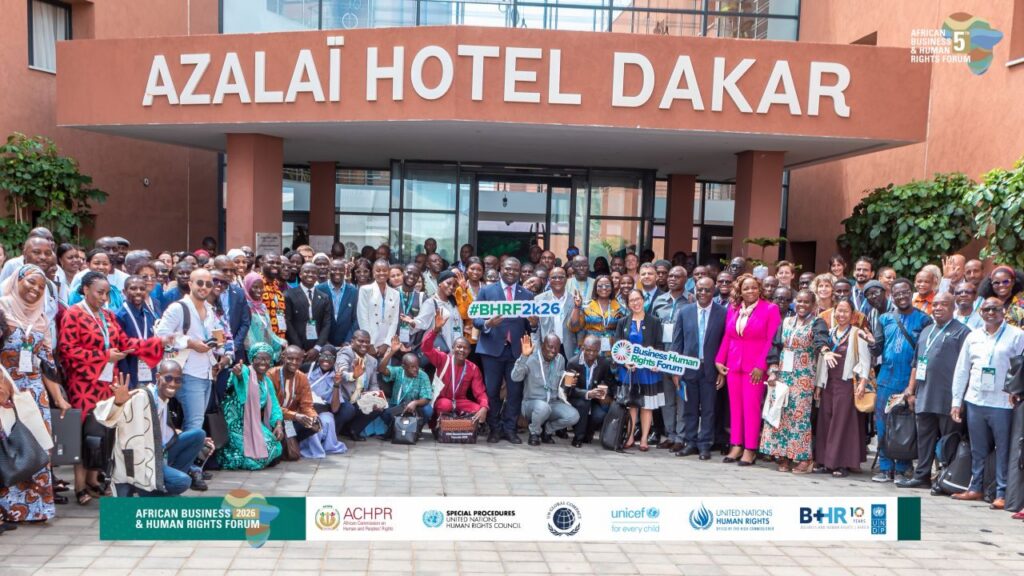
Working behind the scenes: Reflections from the 5th African Business and Human Rights Forum
A behind-the-scenes view of 5th African Business and Human Rights Forum -…
Read More
World News Day: every $1 invested in journalism can return $100 to society. So why are we letting it collapse?
Defending journalism is not just a moral responsibility. It’s an economic and democratic…
Read More
AI legislation is important in upholding universal human rights
Our Director of Responsible Business,…
Read More

