


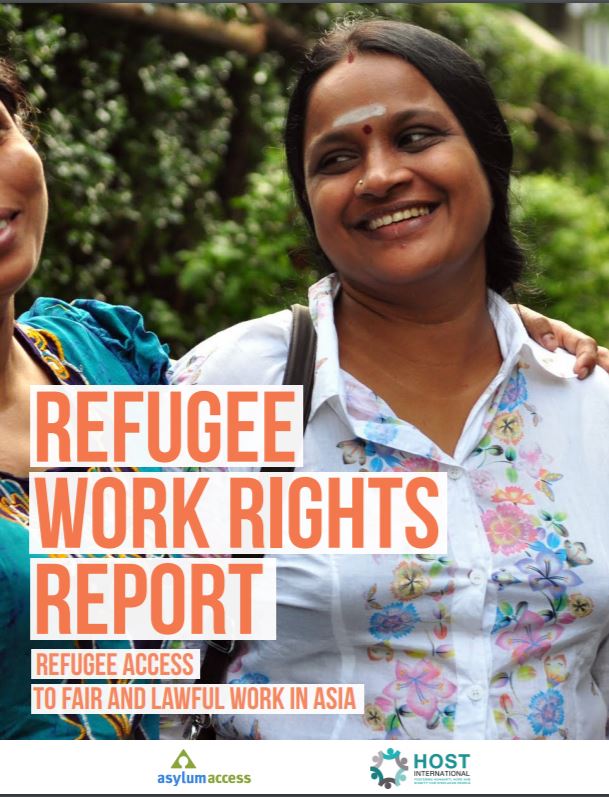
Access to work rights and economic opportunities are crucial to becoming self-reliant and securing a sense of dignity. Work rights are also a prerequisite to a refugee meaningfully contributing to – often bolstering – their host community economy. The legal right to work is an effective, long-term strategy to integrate refugees and benefit from their contributions while other permanent solutions continue to be explored. Unfortunately, accessing lawful employment is challenging and often impossible for refugees.
According to UNHCR, as of the middle of 2018, Asia hosted 9.4 million refugees, internally displaced persons (IDPs) and stateless people. However, out of all 27 South, Southeast and East Asian countries, only 7 (China, Japan, South Korea, Cambodia, Timor Leste, Afghanistan and the Philippines) have signed the 1951 Convention Relating to the Status of Refugees. More importantly, many parts of Asia are experiencing acute labor shortages. East Asia would have to import 275 million people between the ages of 15 and 64 by the year 2030 to maintain the current share of its population who are of working age.
From the 2016 report by Philippe LeGrain — the most comprehensive study available on how refugees contribute to host countries — found that refugees “help create jobs, raise the productivity and wages of local workers, lift capital returns, stimulate international trade and investment, and boost innovation, enterprise and growth.” Asian countries hosting refugees and asylum seekers therefore have an opportunity to tap into their pool of informal workers and incorporate them into a structured workforce that could benefit their economies. This opportunity can only be unlocked if refugees’ work rights are respected and protected.
In light of this, TrustLaw connected HOST International and Asylum Access to six legal teams to examine the rights of refugees to work safely and lawfully in eight countries in Asia: Bangladesh, India, Indonesia, Japan, Malaysia, the Philippines, South Korea and Thailand. It features country-specific scorecards examining policies and practices in each country. It is hoped that this report will provide all stakeholders with a clear baseline and starting point for engaging with refugee work rights in Asia.
The research was led by the in-house team at Nokia with support from Baker McKenzie, Bae, Kim & Lee LLC, BTG Legal, DLA Piper and SyCip Salazar. Due to the collaborative nature of the project, it won the TrustLaw Collaboration Award for 2019. The report was also formally launched at the Global Refugee Forum in December 2019.


Related resources
View all
Legal guidelines on the use of AI in newsrooms (Kenya and Tanzania)
These legal guidelines aim to…
Read More
Casebook for newsroom AI prototypes and governance
This casebook documents what six small and mid-size newsrooms…
Read More
Before you publish: Middle East and North Africa legal pre-publication review guide for journalists
This Guide aims to assist journalists in the Middle East and North Africa in…
Read More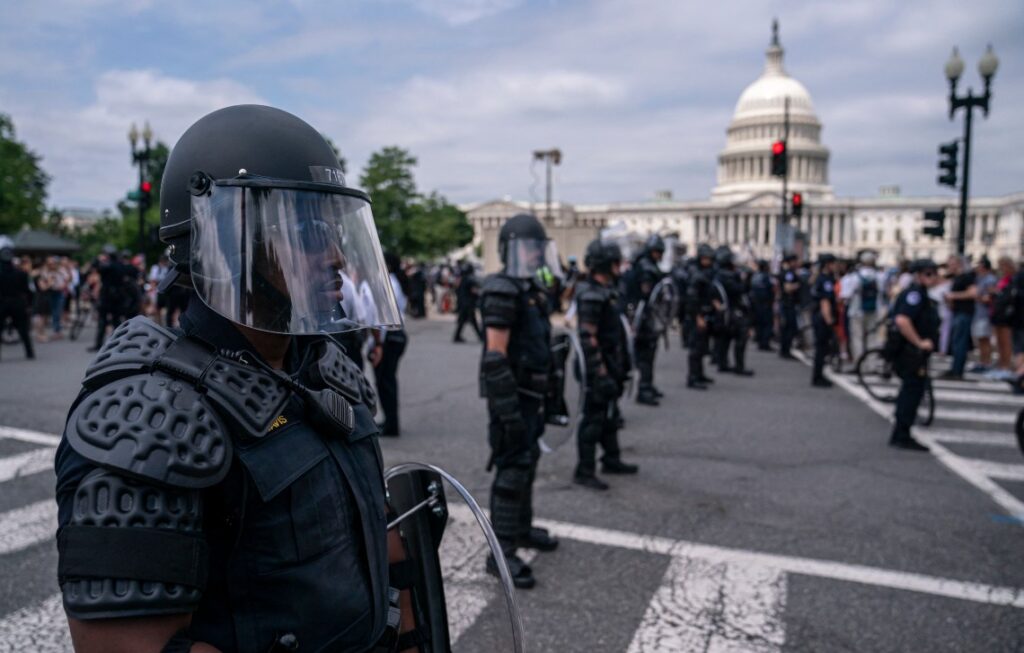
Know your rights guide for journalists covering protests in the U.S.
A guide for journalists in the…
Read More
AI use and best practice policy for newsrooms – Argentina
A practical guide which provides…
Read More
AI use and best practice policy for newsrooms – Uruguay
A practical guide which provides newsrooms…
Read More
Weaponising the law: Threats to media freedom in South Africa
The legal threats eroding South Africa’s…
Read More
The global impact of the EU AI Act
This report is essential reading for business leaders navigating AI governance…
Read More
A New Generation of Laws Is Restricting Civic Space in Latin America
Civil society is under…
Read More
A Practical Guide to Copyright Claims
This resource will allow CSOs and newsrooms to understand and comply with U.S….
Read More

