


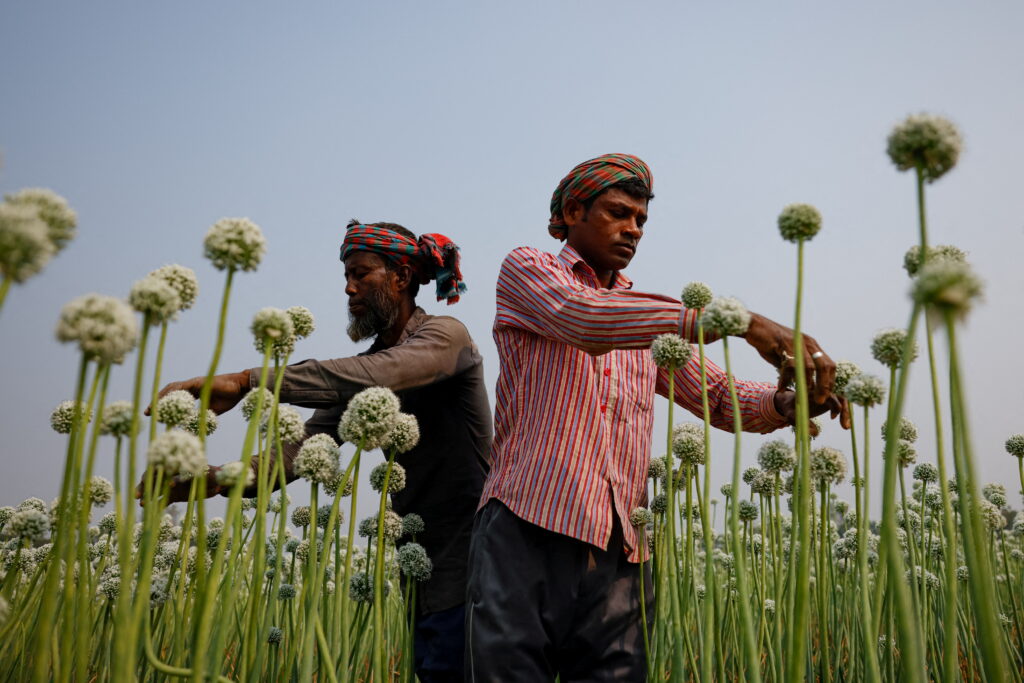
Businesses would not be able to function without the millions of workers who power them. That’s why workers’ rights are at the centre of an inclusive economy, which is woven into the fabric of a resilient democracy.
When workers know they can safely disclose their concerns, influence decisions and secure effective remedy, they are empowered to hold to account the people and institutions that affect their lives.
Yet companies have to balance responsible business practices with a rapidly changing environment. The rise of artificial intelligence, a shifting regulatory landscape and major industrial transitions all pose significant risks for workers’ rights – and with that, the trust that holds democratic participation together. As rising economic pressure, political division and technological change reshape our world, how businesses treat their workers directly affects the health of our democracies.
The Workforce Disclosure Initiative
One way we help to address this is through the Workforce Disclosure Initiative (WDI), our leading voluntary disclosure platform, which turns workforce data into accountability.
In 2025, workforce data from nearly 3,000 companies revealed how powerful a lever the initiative can be for the private sector to understand their workforce throughout their supply chains. By capturing workforce trends consistently, businesses can move away from fragmented information to actionable insights that transform their practices for the better.
This is important because independently held, reliable and comparable data gives companies an opportunity to increase investor confidence. At the same time, it equips policymakers, media and civil society organisations (CSOs) with the information they need to hold companies accountable.
Businesses can’t drive change alone
The trust between businesses, workers and civil society fosters an inclusive environment upon which democratic institutions rely.
Without inclusive dialogue that leads to transparent and accountable governance, trust diminishes – both in companies and the institutions meant to hold them accountable.
Our role in bringing everyone to the table
At the Thomson Reuters Foundation, we believe in the importance of giving all stakeholders a seat at the table to shape the systems that affect them. We run capacity building programmes that bring together businesses, governments, lawyers and CSOs to advance fair labour practices in supply chains.
For example, at the end of March, we brought together 25 participants in Thailand – a vital manufacturing hub for electronics and the automotive industry – to discuss how to better embed workers’ voices in grievance mechanisms. The influential convening with representatives across Thai businesses, NGOs, trade unions, business associations and chambers of commerce led to a mutual understanding of how reliable workforce data can drive more responsible business practices. It was also an opportunity to explore the barriers many businesses face in translating global regulatory expectations into local practice.

I’ve gained so much insight into worker data. Now, as I travel to other countries to discuss how businesses can address grievances, I’m taking these learnings with me to share with others.
Why it matters
By making businesses more transparent and accountable, we help protect democratic participation for the workers whose livelihoods are deeply affected by businesses’ decisions.
If you want to find out more about how you can work with us to advance responsible business practices and drive this work, please get in touch.
I’ll be speaking about how responsible business underpins democratic resilience at Trust Conference, the Foundation’s flagship annual event. This year’s event will be held on 4th and 5th November in London – I hope to see you there.
Share


Sign up to our newsletter
More News
View All
World News Day: every $1 invested in journalism can return $100 to society. So why are we letting it collapse?
Defending journalism is not just a moral responsibility. It’s an economic and democratic…
Read More
AI legislation is important in upholding universal human rights
Our Director of Responsible Business,…
Read More
How civil society can counter the rise of legal restrictions across Latin America
New…
Read More
Legal support: a lifeline for civil society and democracy
How democracies become stronger when civil society…
Read More
Protecting independent media is protecting democracy
How protecting independent media protects democracy itself.
Read More
What legal risks do content creators face? 5 key considerations for influencers
Content…
Read More
What the EU’s Procurement shift could mean for workforce disclosure
In the wake of the…
Read More
Why existing support for civil society can’t solve this crisis
Most support wasn’t designed…
Read More
What happens when content creators and journalists come together?
Our Multimedia Editor for Openly,…
Read More
Constitutional protections are not enough to defend press freedom: what our research in South Africa shows
South Africa’s constitutional protections for press freedom are among the strongest on the…
Read More

